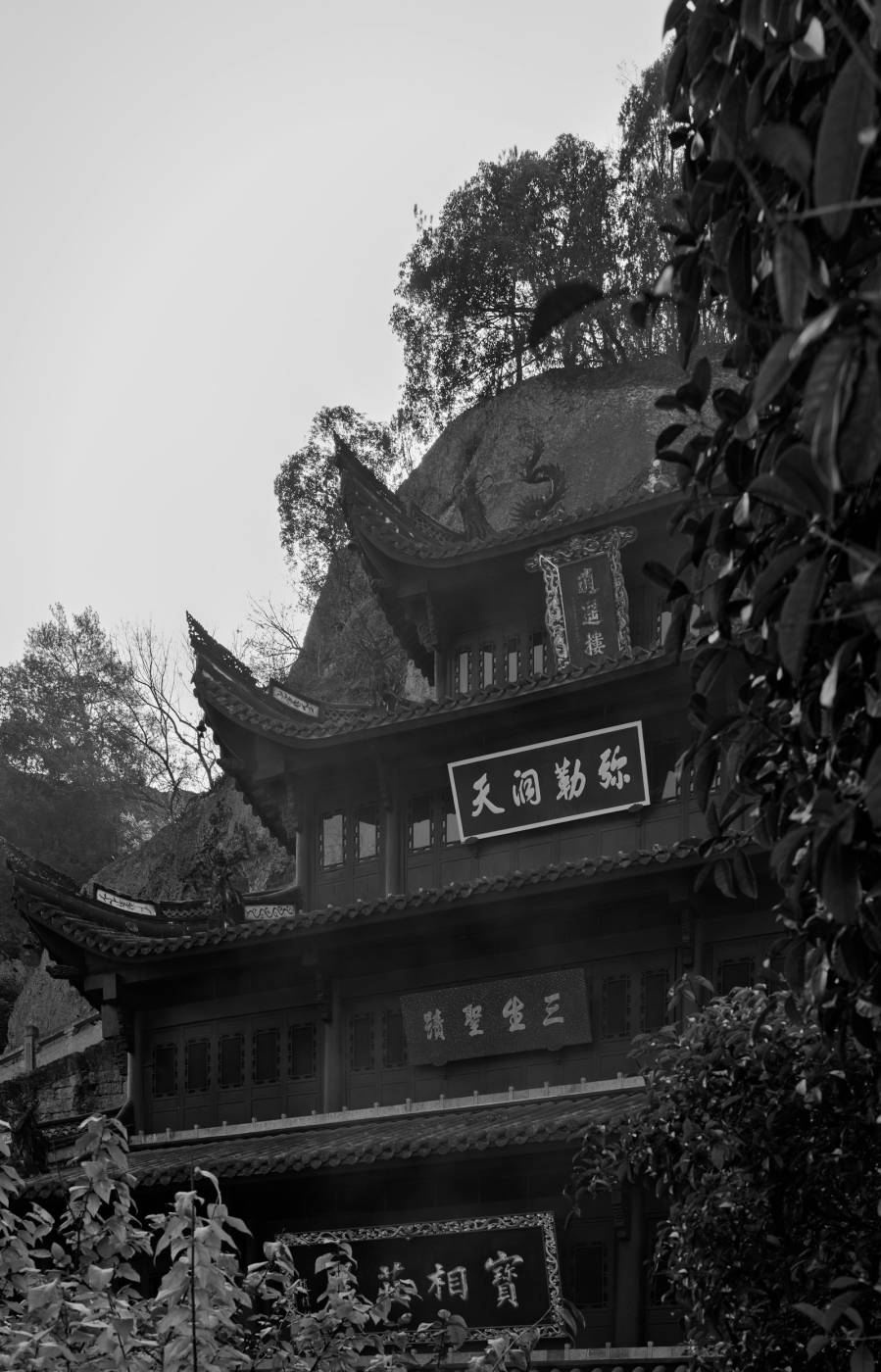
Yi Jin Jing (易筋经) means roughly “the manual for changing the tendons”. It is a Qi Gong set that tradition ties closely to the Shaolin monastery. Where Ba Duan Jin is soft and flowing, Yi Jin Jing includes more holding of positions, stretching under tension and working the whole body as a chain.
Legend and history
According to legend, Yi Jin Jing was left to the monks by Bodhidharma, the Indian monk said to have brought Chan Buddhism to Shaolin. He is said to have seen that the monks were weak from long sitting and gave them exercises to strengthen the body. It is a fine story, but historians point out that the oldest known texts on Yi Jin Jing date from the Ming dynasty, more than a thousand years after Bodhidharma. The legend tells us what mattered to the tradition: that mind and body are one practice.
How it differs from Ba Duan Jin
- More holding. Positions are held longer, and stretching happens with light muscle tension.
- More strength. Some movements need a stable, low stance and use the legs, trunk and arms together.
- Tendons and connections. The focus is on tendons, sinews and fascia - the tissue that links muscles into chains.
What the exercises do
Every movement stretches and strengthens the body along a longer chain: from the feet through the hips and back to the arms. When you push an arm forward, the feet work too; when you turn, the whole spine takes part. That is the difference between stretching one muscle and teaching the body to work as a connected whole - which is also at the core of Kung Fu.
Who it is for
Yi Jin Jing is a little more demanding than Ba Duan Jin, but suits most people who move without major limitations. For those with a sore back or knees it makes sense to start with softer exercises and adapt some positions. For athletes it is a welcome complement that builds mobility under load.
What to pay attention to
- Tension stays even, without cramping or holding the breath.
- The breath stays soft and long, even when a position is demanding.
- Do not compete on depth - stability matters more than how low you go.
- After practice you should feel tired, not drained. If you do, it was too much.
How to learn it
Yi Jin Jing is hard to practise correctly from a book or video alone, because so much depends on where the tension is and where the ease is. A teacher sees when you over-tense the shoulders or lose the stance. We include elements of Yi Jin Jing in our Qi Gong classes and as preparation in Kung Fu.
Frequently asked questions
Is Yi Jin Jing harder than Ba Duan Jin? It is a little more demanding, with more holding and strength, but it can be adapted.
Did Bodhidharma really create it? So the legend says; the oldest known texts date from the Ming dynasty.
How often should I practise it? Two or three times a week is a good start, with softer exercises on the other days.


