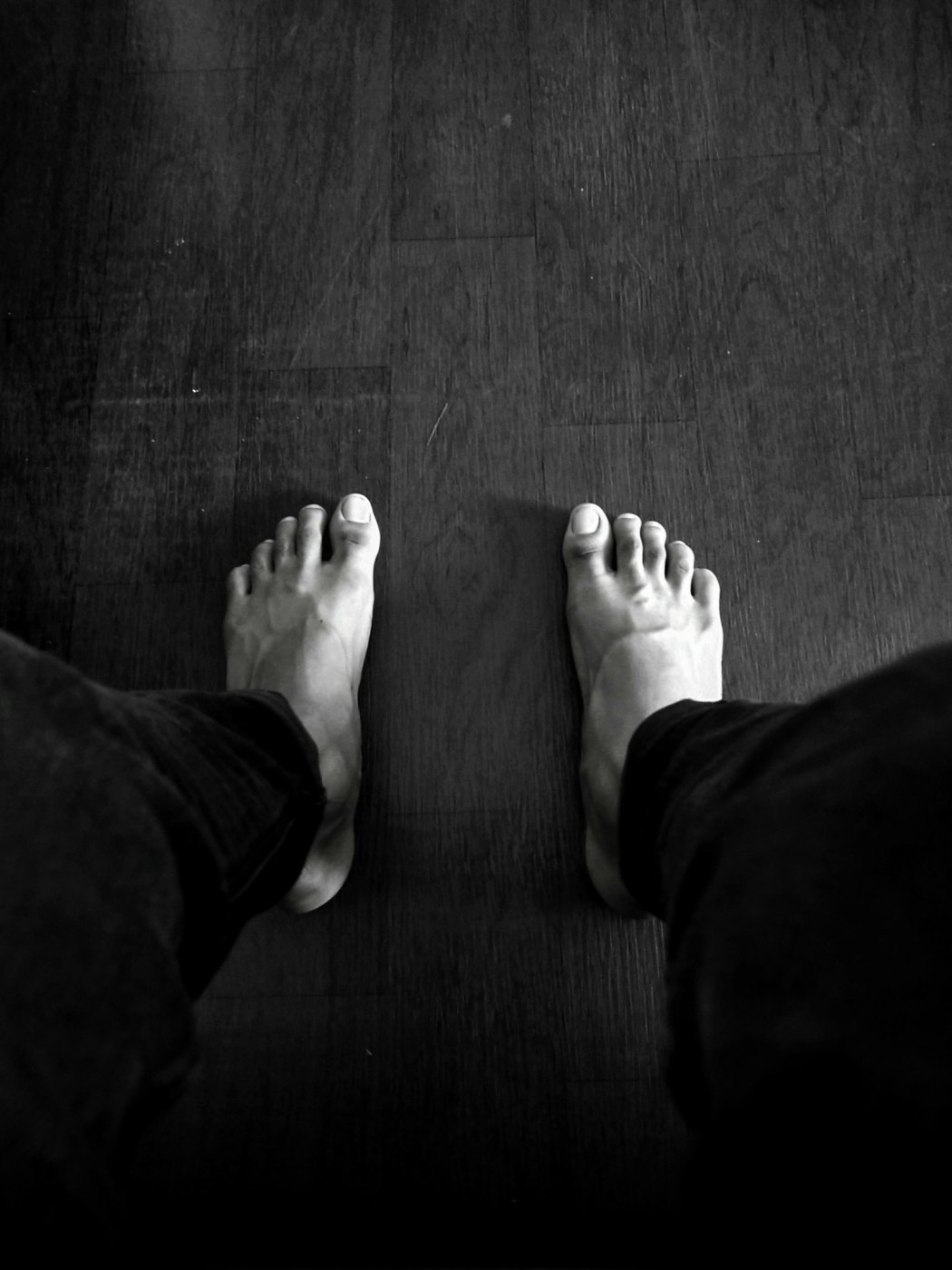
When people first come to the hall, they are often surprised that we train barefoot or in thin shoes. The feet spend most of the day in shoes that support, cushion and restrict them. In training we give them a chance to work again.
What the feet can do
Each foot has 26 bones and more than thirty joints. The foot senses the ground, adapts to uneven surfaces and is the first link in the chain that carries the whole body. In a thick sole much of that falls asleep.
What training barefoot brings
- Better balance. The foot gets more information about the ground and corrects the position faster.
- Stronger foot muscles. The small muscles that hold the arch get stronger.
- A more stable stance. In Kung Fu the stance comes from the feet; barefoot you feel better where the weight is.
- Awareness. You notice whether you stand on your heels, on the outer edge or on your toes.
Simple exercises
Three points of contact. Standing, feel the heel, the pad under the big toe and the pad under the little toe. Spread the weight across all three.
Toes like a fan. Spread the toes, then place them back on the floor one by one.
Rising onto the toes. Slowly up, hold, slowly down. Ten repetitions.
Standing on one leg. Half a minute, then switch. When it is easy, close your eyes.
How to start
If you are used to shoes only, start gradually: a few minutes barefoot at home, then longer. The hall floor is clean and suitable for training. With painful feet, diabetes or wounds, talk to a doctor; in that case thin shoes are a good choice.
Hygiene in the hall
Bare feet also mean caring for the shared space: clean feet, short nails and slippers for the corridor. It is not a rule for its own sake, but respect for others.
More on how the first class works on the Kung Fu in Ljubljana page.
Frequently asked questions
Do I have to train barefoot? Not necessarily. Thin, clean shoes are fine.
Is training barefoot hygienic? Yes, with clean feet and a regularly cleaned floor.
What about flat feet? Foot exercises are often useful, but with problems talk to a specialist.


