
After lower back pain, shoulder pain is the second most common complaint among people who come to us. And as with the back, the cause is almost always somewhere other than where it hurts.
A note: this is not medical advice. With sharp pain, restricted movement after an injury, or pain that wakes you at night, see a doctor first.
What sitting actually does
Eight hours at a screen puts the body in a very specific position: arms forward, shoulder blades apart and lifted, chest closed, head in front of the body.
Three things follow.
The chest muscles shorten. That pulls the shoulder forward and inward.
The muscles between the shoulder blades weaken. Not through damage but because nothing uses them.
The shoulder blade loses mobility. This is the crucial part. The shoulder does not move alone when you raise an arm - two thirds of the movement comes from the upper arm and one third from the shoulder blade rotating across the back. If the blade does not move, the upper arm has to do everything, and the joint runs out of space.
The result is impingement: with every raise of the arm, tendons are squeezed into a space that is too small. That is why it hurts on top and to the side, why it hurts reaching into a cupboard, and why it hurts at night when you roll onto that side.

Why massage and stretching often are not enough
Because they address the symptom. A tight upper trapezius is the consequence of somebody else not doing their job - usually the lower trapezius and serratus, which should be rotating the shoulder blade.
Release the tight muscle without fixing the pattern and it is back within three days.
Three things that reliably help
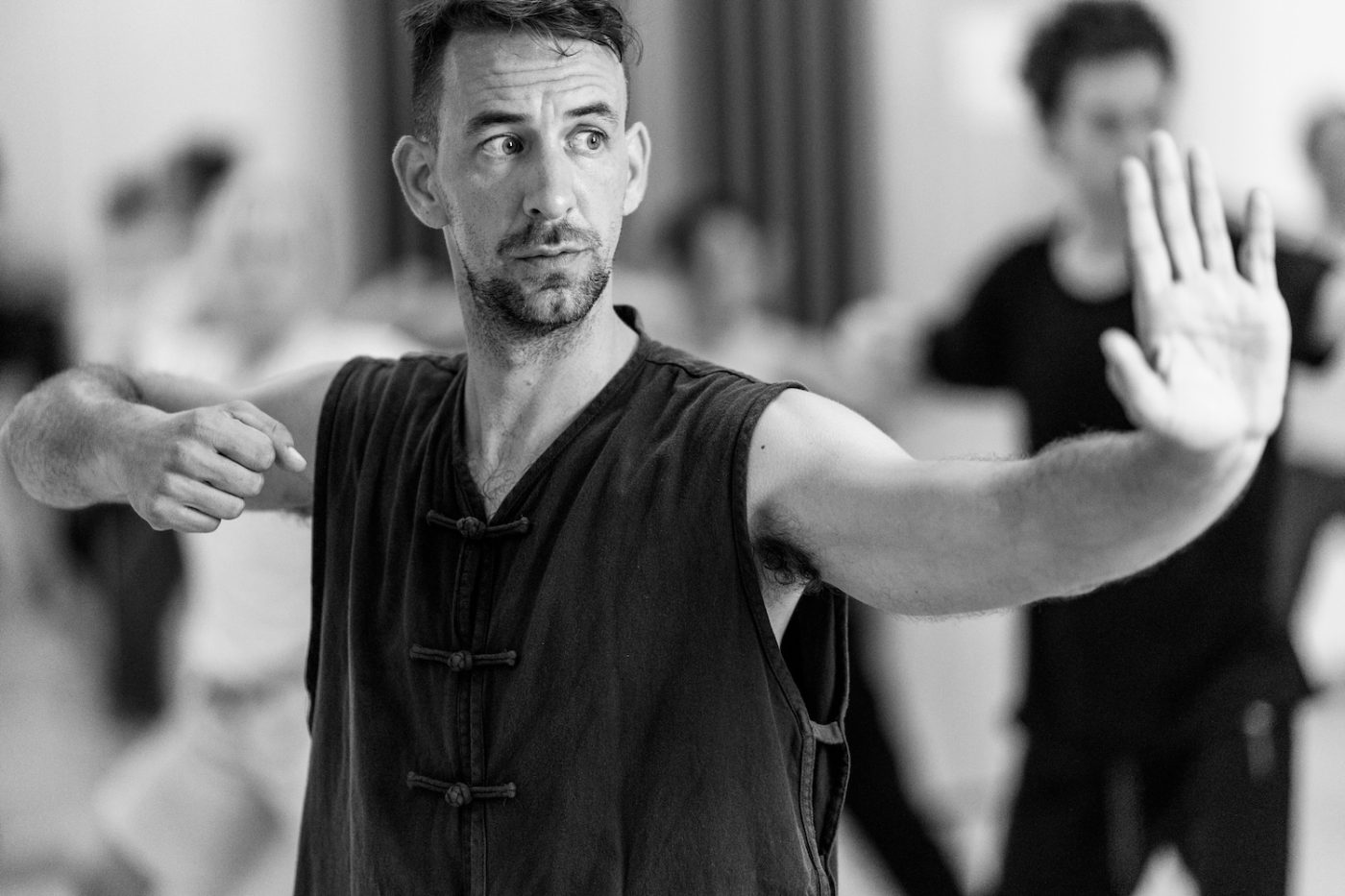
1. Opening the chest under load. Not passive stretching in a doorway, but active opening in which the muscles between the shoulder blades work. In Qi Gong this is one of the basic movements: the arms open outward on the inhale, the shoulder blades draw together, the chest opens.
2. Moving the shoulder blade through its full range. Shoulder circles forward and back, slowly and all the way. It sounds trivial; most people have not done it in months.
3. Overhead work - gradually. A shoulder that only goes overhead when reaching a top shelf loses range. Low stances and overhead movements in Kung Fu maintain it.
The soft overcomes the hard. The gentle overcomes the rigid.
Five minutes you can do every day
- Shoulder circles, ten forward, ten back, slowly and through the full range.
- Opening the chest with the breath, ten repetitions. Arms in front, apart on the inhale, together on the exhale.
- Shoulder blade squeezes, five seconds, five times. Without lifting the shoulders.
- Lengthening the neck. Chin slightly tucked, the back of the neck lifting. Hold five seconds. This addresses the forward head, which is half the problem.
What to change at your desk
Raise the screen. Top edge at eye level. A laptop without a stand is the most common cause we see.
Elbows by your sides. A mouse too far forward means the shoulder holds the arm in the air all day.
Stand up every 45 minutes. Not for long. Thirty seconds of shoulder circles does more than one long exercise in the evening.
What to expect
After two weeks of regular training: less tension at the end of a working day.
After two months: more overhead range and fewer nights waking on that side.
After six months: the shoulder stops being a topic.
Qi Gong at 17:30 at Ziherlova 44 in Ljubljana does exactly this - opening the chest, moving the shoulder blades, and breath - twice a week, with no equipment.


