Balance is the one physical capacity you lose without noticing. You notice strength, because you cannot lift a shopping bag. You notice fitness on the stairs. Balance declines quietly - until the day you step wrong off a kerb.
Why it declines
Balance is not one capacity but the cooperation of three systems: vision, the vestibular organ in the inner ear, and proprioception - the sense of where the body is, coming from joints, tendons and feet.
After forty all three decline slightly, but that is not the main reason. The main reason is disuse.
A modern day happens on flat, predictable surfaces, in thick-soled shoes, mostly seated. A system that is not challenged shrinks - exactly like a muscle.

How to check where you are
A simple test you can do at home. Stand barefoot, arms at your sides, lift one foot so it rests at the ankle of the other leg. Close your eyes. Time it.
- Under 5 seconds: the system has gone to sleep. Progress will be fast.
- 5 to 15 seconds: average for a sedentary life.
- 15 to 30 seconds: good.
- Over 30 seconds: you are already doing something right.
Repeat the test two months later. Almost everyone who trains regularly in between moves up a band - and it is one of the few measurements where progress is this obvious.
Why a martial art addresses this better than a balance cushion
Because it is movement, not a pose. Standing on a cushion is a static task. In real life you lose balance while moving - in a turn, a transition, a step sideways. Kung Fu is made of transitions.
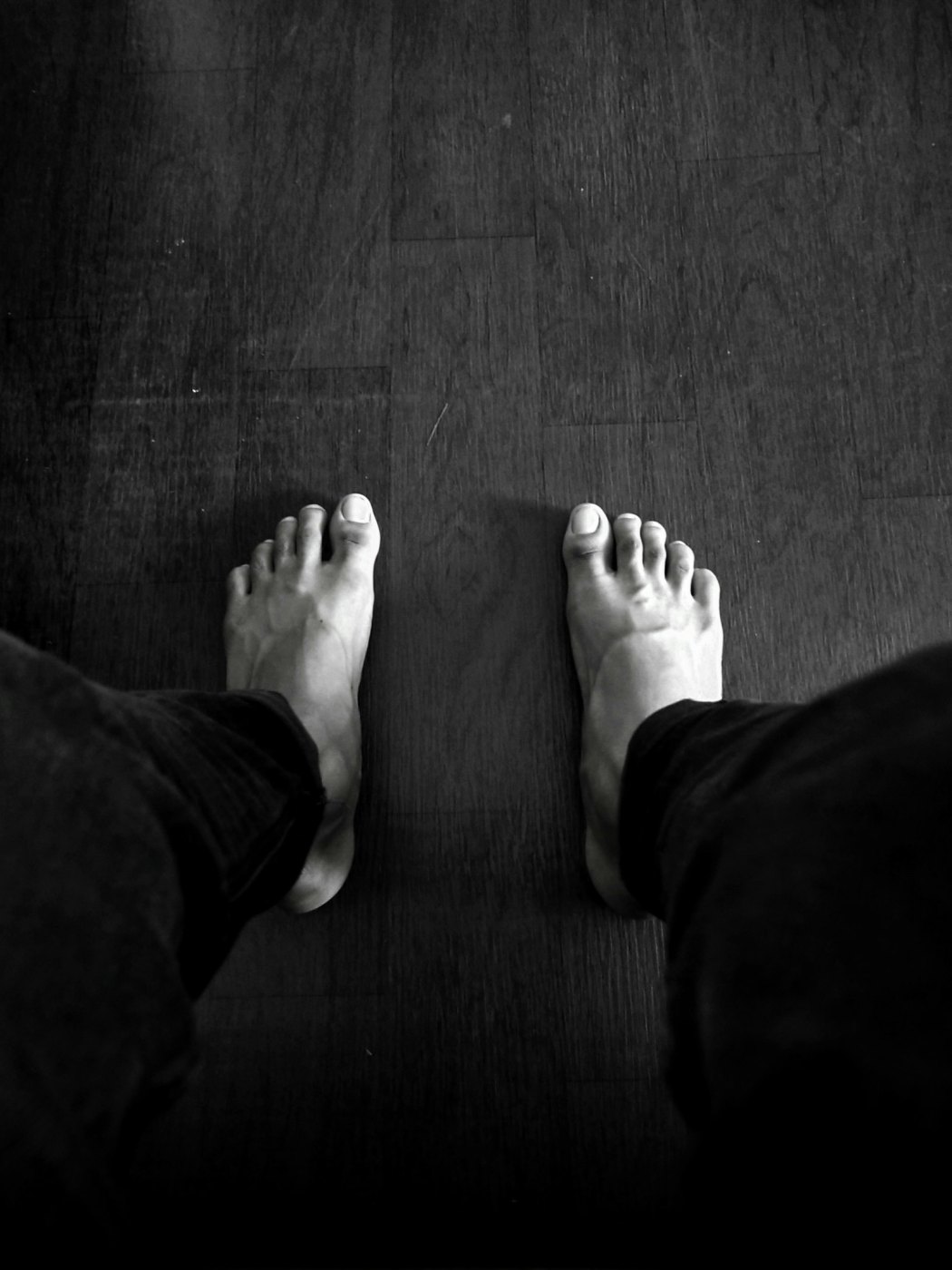
Because it is barefoot. The foot gets information about the ground that shoes remove.
Because the stances are low. A low centre of gravity demands more from the hip and ankle stabilisers than upright posture does.
Because it is slow. A fast movement can be carried through imbalance by momentum. A slow one exposes it.
Because attention is part of the practice. Balance is largely a matter of attention, and attention is exactly what a martial art and Qi Gong train systematically.
A journey of a thousand miles begins beneath one’s feet.

What you can do at home
- Stand on one leg while brushing your teeth. Thirty seconds a side, every day. Close your eyes once it gets easy.
- Walk barefoot around the flat. The simplest way to give your feet their job back.
- Put your shoes on standing up. Instead of sitting down. It works better than many prescribed exercises.
- Walk a kerb or a line. Heel to toe, slowly. It sounds childish and it is not.
- Get up off the floor without using your hands. The single best indicator of functional capacity after forty.
How quickly it comes back
Faster than anything else. Balance is largely a matter of the nervous system rather than tissue - and the nervous system adapts in weeks, not months.
After two weeks of regular training the difference in the eyes-closed test is usually already measurable.
After two months it shows outside the hall: on uneven ground, on stairs in the dark, in a sudden change of direction.
Which is why balance is the most rewarding thing to start working on after forty - and why this piece is written as good news rather than a warning.


