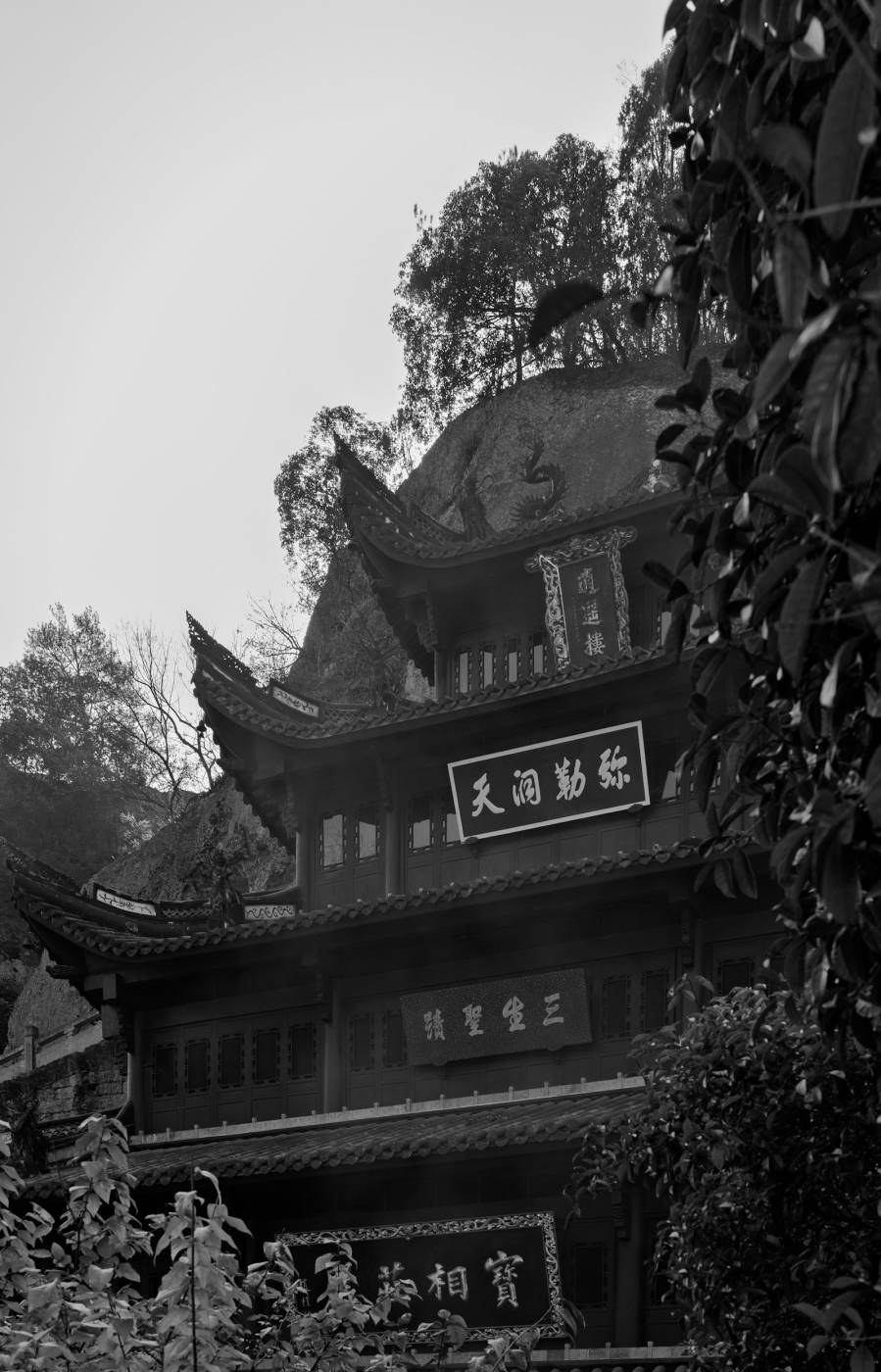
The question comes sooner or later, usually after the first year: when do weapons start. And immediately behind it the quiet second question few people say out loud - what for, since I do not walk around Ljubljana carrying a staff.
The second question is the real one and deserves an honest answer.
Why we learn weapons at all
Not for application. Nobody in this hall expects to need a spear.
We learn weapons because they are an uncompromising teacher of structure. Empty-handed you can hide many faults - with strength, with speed, by forcing a movement to its end. A weapon does not allow that.
A staff, roughly one metre eighty long, works as an extension of the body and as a magnifying glass. If the wrist is loose, the staff judders. If power does not come from the legs, the tip does not arrive where it should. If the shoulder is tense, the movement stops halfway. All of that is hard to see with hands alone; with a staff it is obvious within three seconds.
That is why weapons always came late in traditional Kung Fu - not as a reward, but as a test.
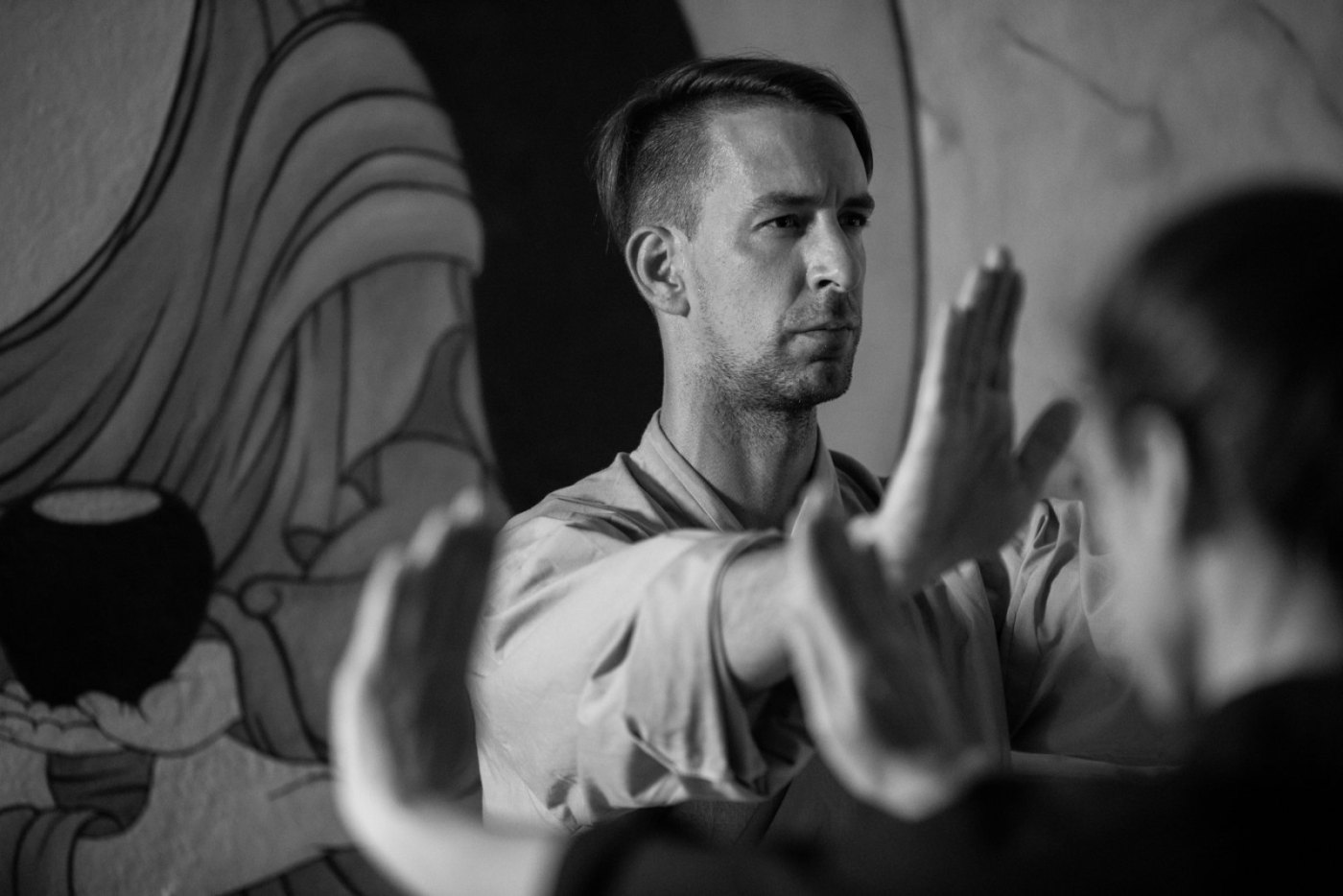
Staff 棍 - first and most important
The staff is the first weapon in the Shaolin tradition, and not by accident. The monks were Buddhists; carrying a blade sat badly with the vows, while a staff was a tool - a walking support, a carrying pole, something everyone had and which was not a weapon until it needed to be.
In training, the staff mostly develops whole-body connection and force transfer. Because it is long and heavy, arm strength achieves nothing - every movement has to come from the hips and legs. For many students the staff is the moment they first genuinely understand what it means for a movement to originate in the ground.
Sword 劍 - precision
The straight jian sword is the opposite of the staff. It is light, and unforgiving precisely because of it. Where the staff punishes a lack of power from the legs, the sword punishes a lack of precision.
With a sword every unnecessary tension in the arm shows, because the tip trembles. Every movement half a centimetre off shows, because the edge points the wrong way. The sword demands a soft hand and a firm centre at the same time - a combination that is hard to learn empty-handed.
In Chinese tradition the sword was regarded as the scholar’s weapon rather than the soldier’s. That is not only romance - it is a description of what it asks for.
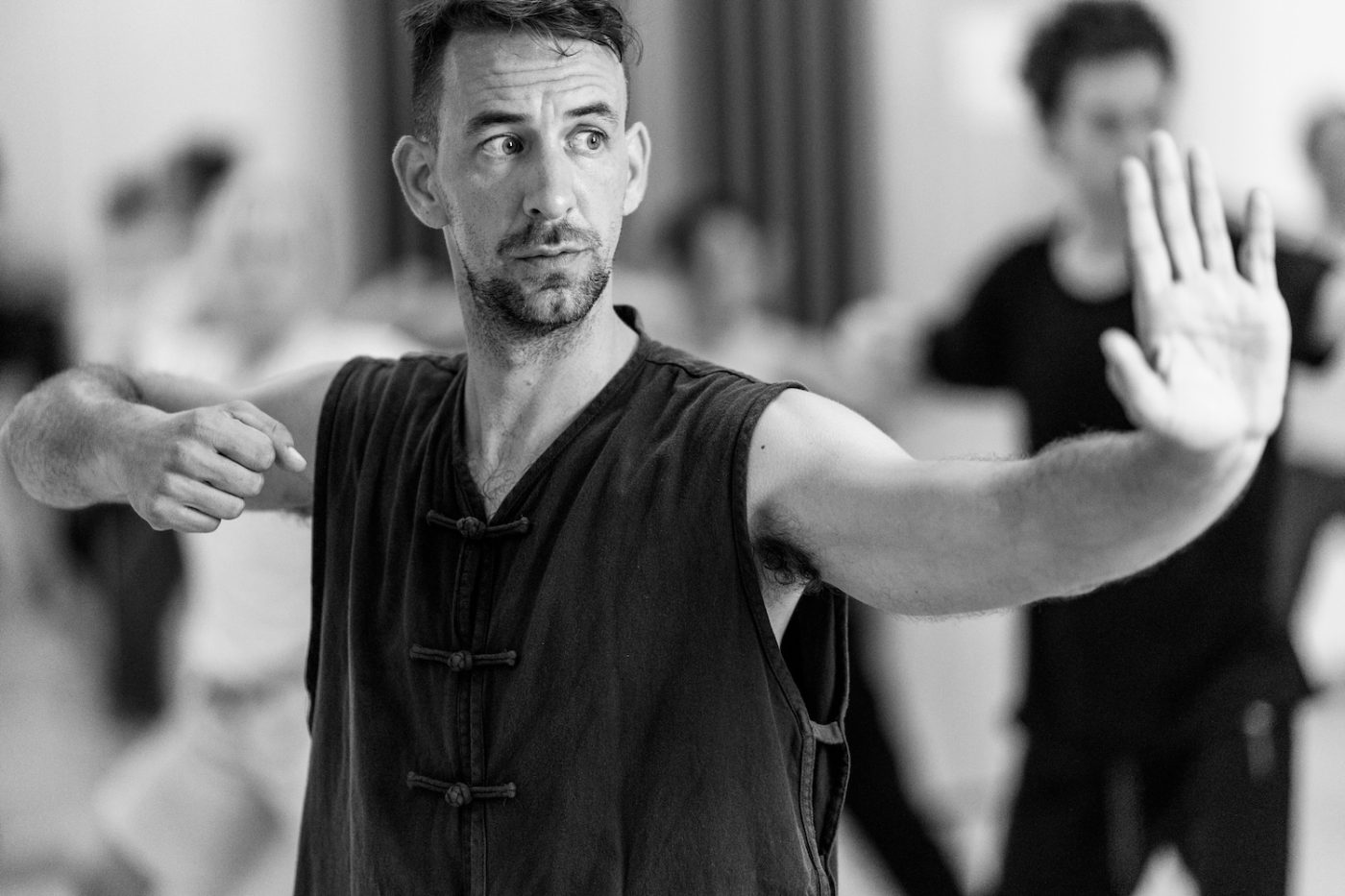
Spear 槍 - coordination at distance
The spear is the hardest of the three and comes last. It is long, its balance point sits far from the hands, and it requires the body to work as one unit at a distance that is difficult to feel.
What the spear trains particularly well is balance under asymmetric load. The weight is always on one side and always moving, so the centre has to work continuously. After a few months with a spear, empty-hand stances feel easy.
What remains once you put the weapon down
This is the point, and the answer to the quiet second question.
A student who has worked with a staff for six months has a different empty-hand form. The arm moves from the back rather than the shoulder. Rotation comes from the hips. The wrist is firm without being rigid. None of that was taught as an individual technique - all of it follows from the weapon showing the faults until they were fixed.
In that sense we do not train weapons in order to be good with them. We train them in order to be better without them.
When they come
Once the stances hold and the empty-hand form is solid enough for the weapon to have something to extend. For most students that is somewhere after the first year, for some earlier and for some later.
A sword placed too early in the hand of someone who cannot yet stand teaches nothing - it only consolidates the faults, now with an extension. So we do not hand them over faster than makes sense, even when someone wants them.


