
When a newcomer sees that part of the class is done in pairs, the same worry usually appears: what if I get someone who goes too hard? The worry is fair. So it is worth explaining how partner work is actually built here.
What a paired drill is, and is not
A paired drill is not a fight. In the great majority of cases it is an agreed exchange: one person performs, the other holds, receives or responds in a known way. The aim is not to win - the aim is for both to get repetitions.
Every such drill has three agreed parameters, stated by the teacher: what is being done, at what speed and with what force. As long as those three hold, there are no surprises. Free sparring comes much later, and never without supervision.
Why you cannot do without a partner
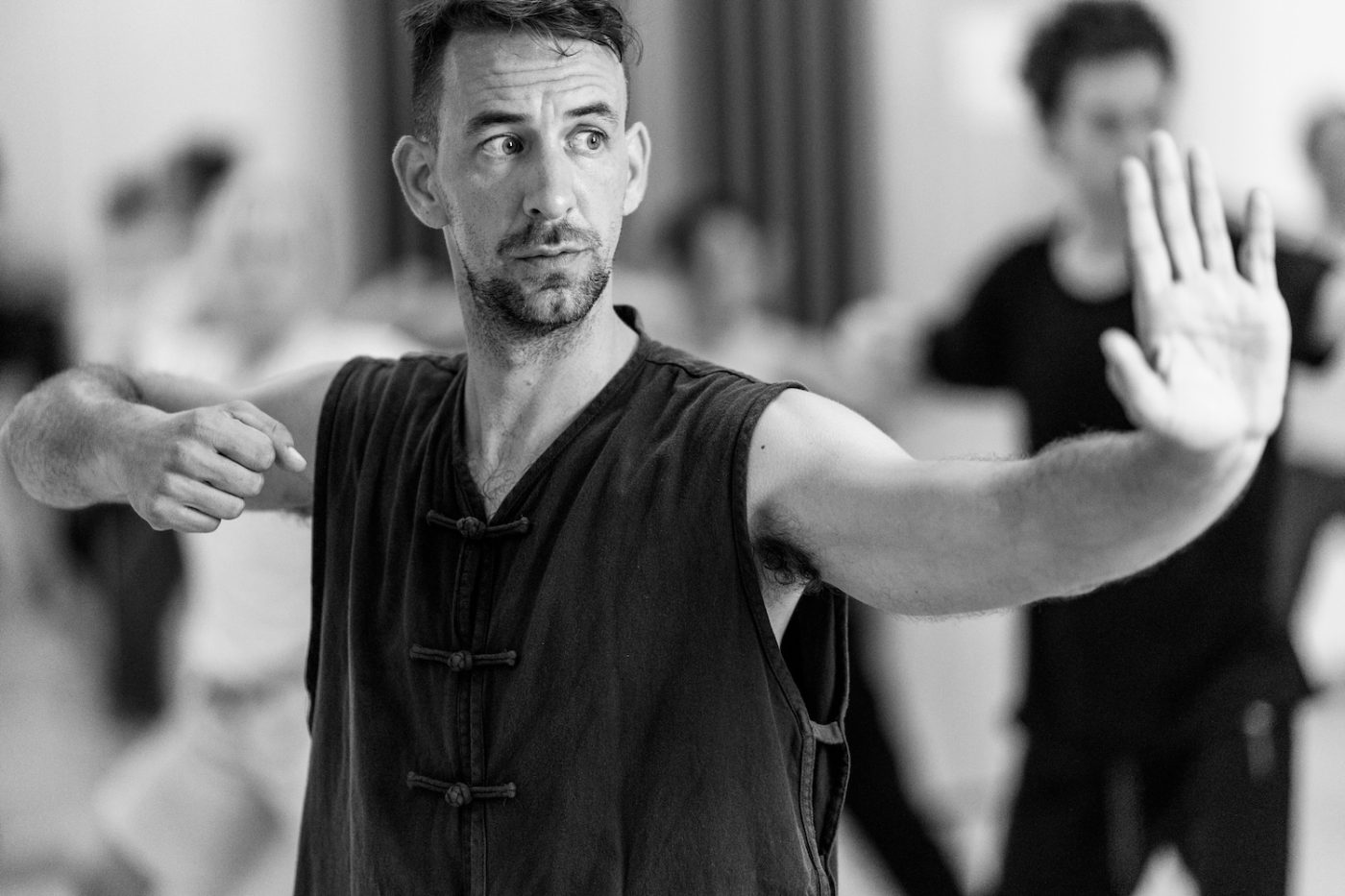
Every technique you practise in the air has an ideal distance, an ideal angle and an ideal moment. All three can only be shown to you by another body. Alone in a room you will polish the movement, but you will never learn whether you arrived too late or too far - only a partner tells you that.
Alone you learn what a movement looks like. With a partner you learn when it happens.
Why it is also a social exercise
Partner work demands something we rarely practise in daily life: trusting your body to someone for a few minutes, and deserving that same trust in return. A good deal of hall etiquette follows from this, even where it looks like mere politeness - the bow before a drill, watches and rings removed, short nails. These are not rituals; they are how trust is re-established each time.
An interesting consequence: people get to know each other faster in a training hall than almost anywhere else. Not through conversation, but through how you handle someone who is, for a moment, in your hands.

What if a partner is too strong or too rough
It happens and it is not a disaster. Two responses are entirely acceptable and used regularly:
- Say so directly. “Could we go a bit slower?” is a normal sentence in the hall and nobody takes it personally.
- Tell the teacher. If it does not improve, that is their job, not yours.
For harder drills the teacher assigns pairs rather than leaving it to chance. We will not send a beginner to someone who has trained for ten years and has hands like hammers - at least not until that person has shown they can work with a beginner, which is incidentally a measure of progress in itself.
Rotating partners
We usually change pairs during a class. A tall partner teaches you a different distance than a short one, a strong one a different lesson than a supple one. Anyone who always trains with the same person learns to work superbly against one body - which is of little use outside the hall.


