
An institution does not last fifteen centuries by luck. It lasts because it knows how to carry what is essential through the eras in which it loses everything else. The history of the Shaolin monastery is a sequence of catastrophes and returns - which is exactly why it has something to teach anyone who trains in this tradition, including in Ljubljana.
Founding and first fame (495-900)
The monastery was founded in 495 by Emperor Xiaowen of the Northern Wei dynasty for the Indian monk Batuo. A few decades later, tradition places Bodhidharma there and with him the beginning of Chan Buddhism. In 621, Shaolin monks supported the future Tang emperor Taizong - an event carved into a stele that still stands in the monastery. The dynasty’s gratitude brought land, privileges and a status from which the monastery’s peculiar role grew: a Buddhist institution with the right, and the duty, to defend itself.
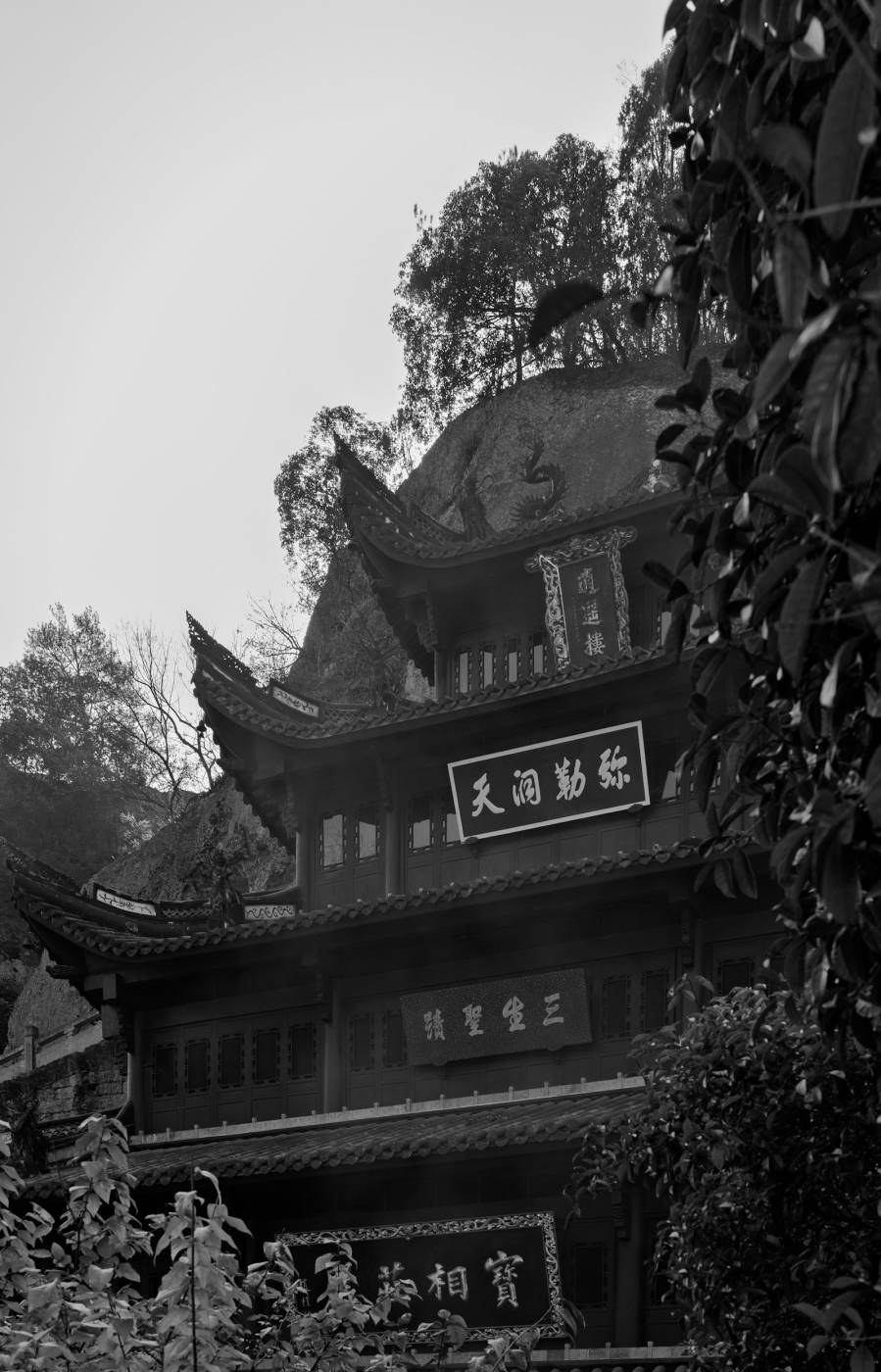
Golden age and first blows (900-1600)
Through the Song, Yuan and Ming dynasties the monastery was a religious and training centre housing thousands. In the sixteenth century Shaolin monks repeatedly defended the coast against pirates - reported in official chronicles, a rare case of martial reputation confirmed by independent sources.
But the same centuries brought the first heavy blows: lootings in the wars at the end of each dynasty, when the monastery was, every time, a wealthy and poorly protected target.
Walls can be burnt. What makes the monastery a monastery walks out in the morning with the monks - and returns when they do.
The Qing: surveillance and retreat into shadow (1644-1912)
The Manchu Qing dynasty distrusted martial communities. The monastery formally continued, but under watch; martial training withdrew into semi-secrecy, and in this period the art spread outside the walls - through villages, families and societies. Ironically, the era of restriction is what spread the art most widely among ordinary people.
The darkest century (1912-1980)
In 1928 the warlord Shi Yousan set fire to the monastery during the civil war; by contemporary accounts the fire burnt for forty days, destroying much of the buildings, the library and the archives. Decades of war followed, then the Cultural Revolution, when religious and traditional practice was persecuted and the few remaining monks were driven out.
By the 1970s Shaolin was a nearly empty place with a handful of elderly monks. That the tradition did not die is owed to the people who carried it with them - teachers in exile and lay masters in the surrounding villages who kept the practice alive privately.
Revival and its price (1980-today)
The turning point was an unlikely one: the 1982 film Shaolin Temple with Jet Li set off worldwide enthusiasm. China rebuilt the monastery, schools with tens of thousands of students grew around it, and Shaolin also became a brand and a tourist destination with millions of visitors.
The revival is real - a monastic community lives there again, and both training and Chan practice have been restored. But the price is real too: commercialisation, performances and marketing that are hard to tell apart from the heritage. Hence the rule we have written elsewhere: invoking Shaolin by itself says nothing; what counts is who taught whom, and what actually happens in class.
What this history teaches us in Ljubljana
Three points. First: a tradition survives not in buildings but in transmission from person to person - which is why a living line of teachers is what matters in any school. Second: the art repeatedly survived precisely outside the monastery, among ordinary people with ordinary lives - exactly the position of those who train with us. And third: every revival brings kitsch with it; the task of a serious school is to hand on the method, not the costume.


