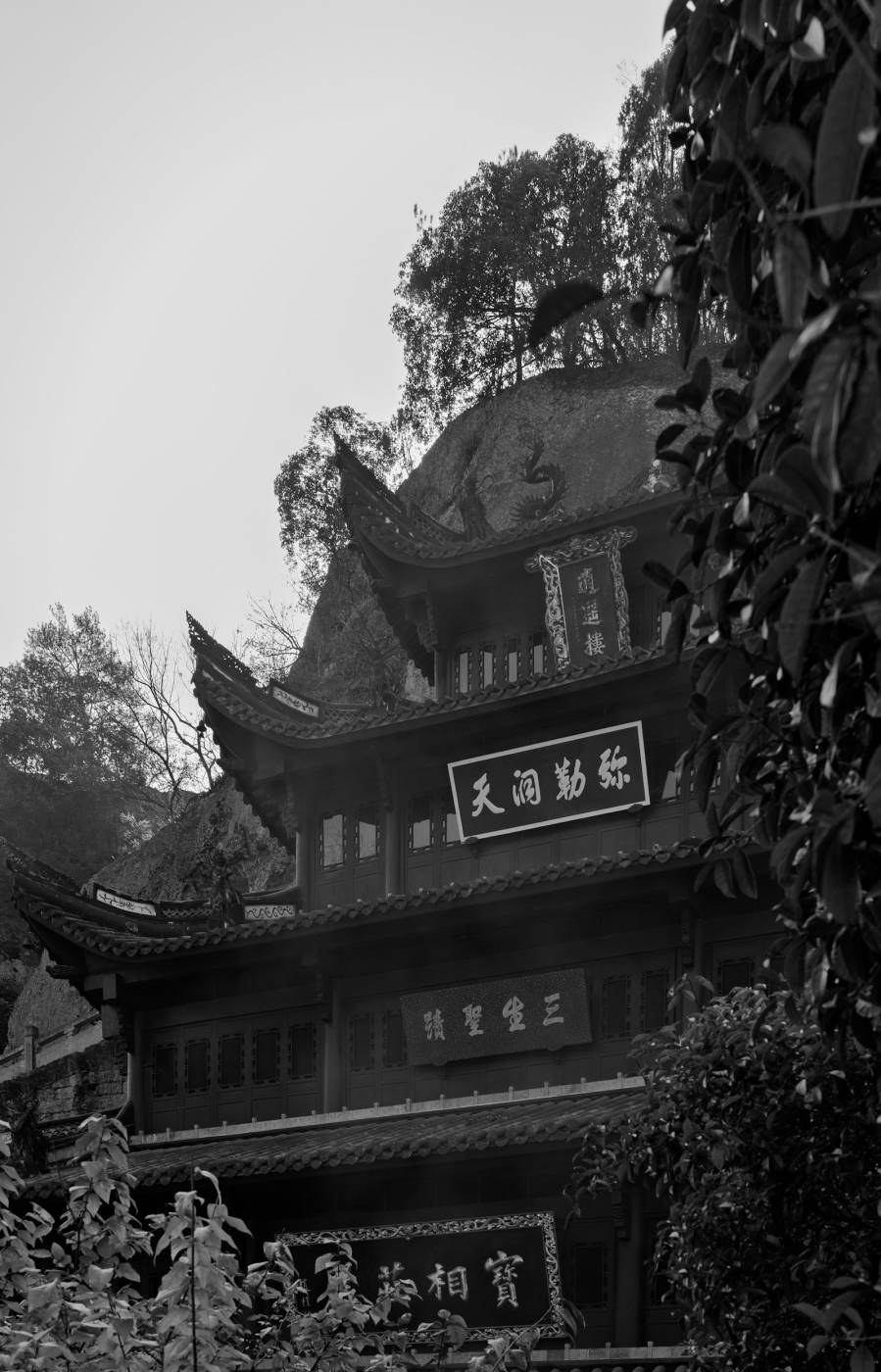
Almost every school of Chinese martial arts invokes Shaolin sooner or later. The word carries a weight that is hard to verify - somewhere between history, cinema and advertising.
Since we invoke it too, it is only fair to say what Shaolin is, what it is not, and what of that tradition actually reaches the hall at Ziherlova 44 in Ljubljana.
What Shaolin actually is
Shaolin (少林寺, “young forest monastery”) is a Buddhist monastery on Mount Song in Henan province, China, founded at the end of the fifth century. The name comes from the young forest on the slope, not from anything more mysterious.
The monastery matters above all as the cradle of Chan Buddhism - the Chinese ancestor of Japanese zen. The martial arts came later and for entirely practical reasons: the monastery was wealthy, remote and near trade routes, and the monks had to be able to protect themselves and the pilgrims.

What is myth and what is not
Myth: that Bodhidharma, an Indian monk, brought martial arts from India and taught them to the monks. It is a good story with no historical basis; the first accounts of it appear more than a millennium after his supposed presence.
Myth: flying monks, indestructible bodies, secret techniques passed on only by word of mouth. The market value of those stories is high, their training value zero.
Not myth: that Shaolin housed a systematic physical practice tied to breath and meditation for centuries, and that a whole family of arts we now call Shaolin Kung Fu came out of that environment.
Not myth: that the monastery was destroyed several times - most recently in 1928 - and that today’s Shaolin is largely a reconstruction, and partly a tourist site. That is no reason for cynicism; it is a reason for caution with anyone promising an “unbroken original lineage”.
Sit quietly, doing nothing; spring comes, and the grass grows by itself.
What of that tradition we actually train
What survived from Shaolin as useful is neither a costume nor a pedigree. It is a method:
- Body, breath and mind as one practice. Not three separate subjects but three aspects of the same hour. Which is why Qi Gong and Kung Fu are not separate programs here.
- Forms as carriers of knowledge. Before print and video, a sequence of movements was the only reliable way to pass technique across generations.
- Gradual progression. Years of basics before anything advanced. That is why traditional schools work more slowly and last longer.
- Practice as a habit, not a project. The monastic rhythm was daily, not seasonal.
How that line reached Ljubljana
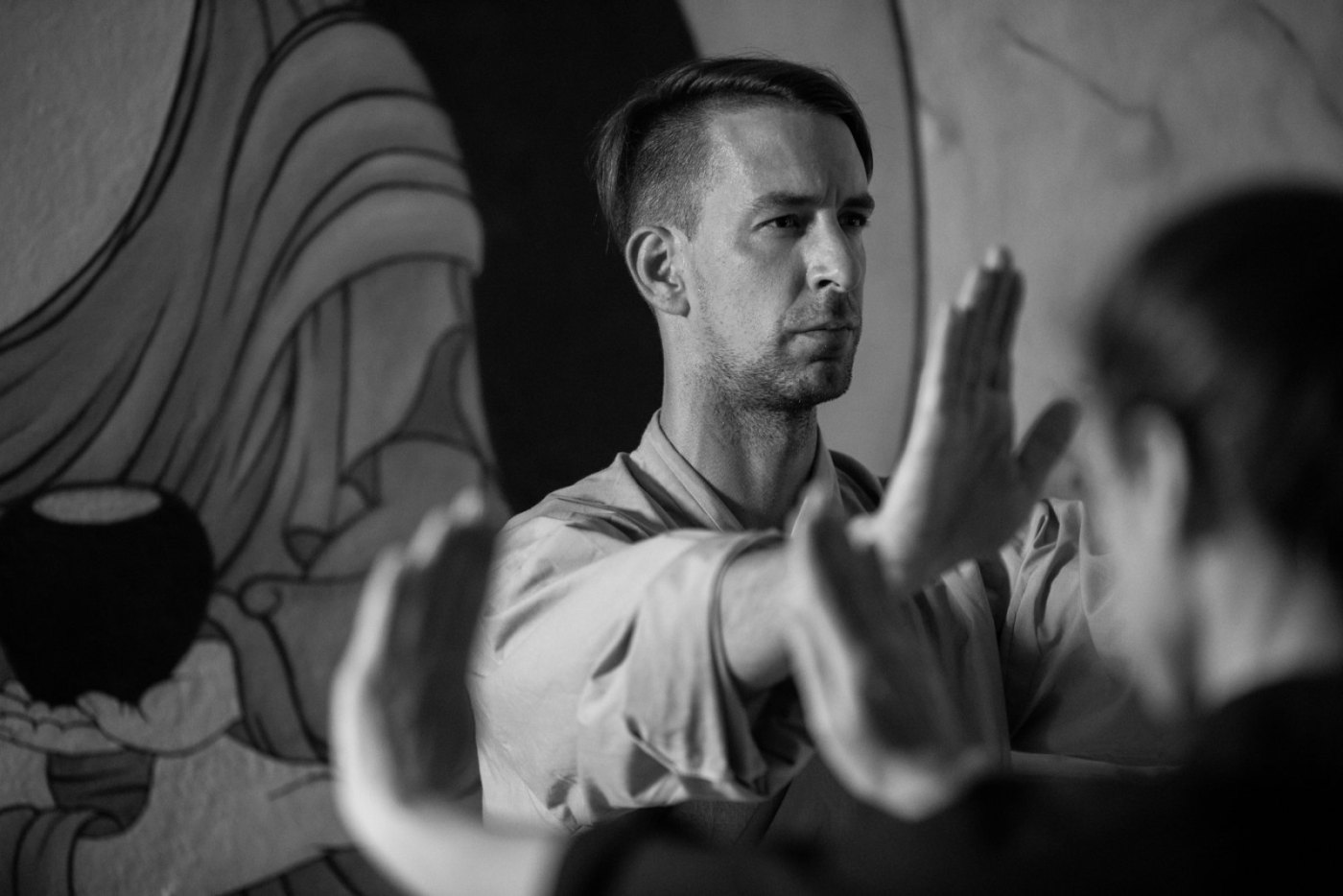
Both teachers at Body.Mind spent years as students and instructors at the Shaolin Temple Slovenia. That is not an appeal to a distant China but to a specific school and specific teachers they trained under for years.
What we brought from there into the training centre in Ljubljana is the shape of a session: a long warm-up through the joints, basics, forms, breath work, and only then the fighting side. What we left outside are belts as a sales argument, competitions as a measure, and any explanation that cannot be checked against your own body.
Why this matters to you
If you are looking for a martial art in Ljubljana, you will find several schools invoking the same name. The invocation itself tells you nothing. What does tell you something is:
- whether they say who taught whom, and where;
- whether the session leaves room for breath and settling, or only for intensity;
- whether you get individual corrections or only counted repetitions;
- whether they promise results in weeks.
You get the answers in one hour, not from a website. Not from ours either.
Where to test it
Classes run at Ziherlova 44 in Ljubljana, mornings and afternoons, for adults and children. You can sign up with a single visit to see what this tradition looks like in practice - no experience needed.


