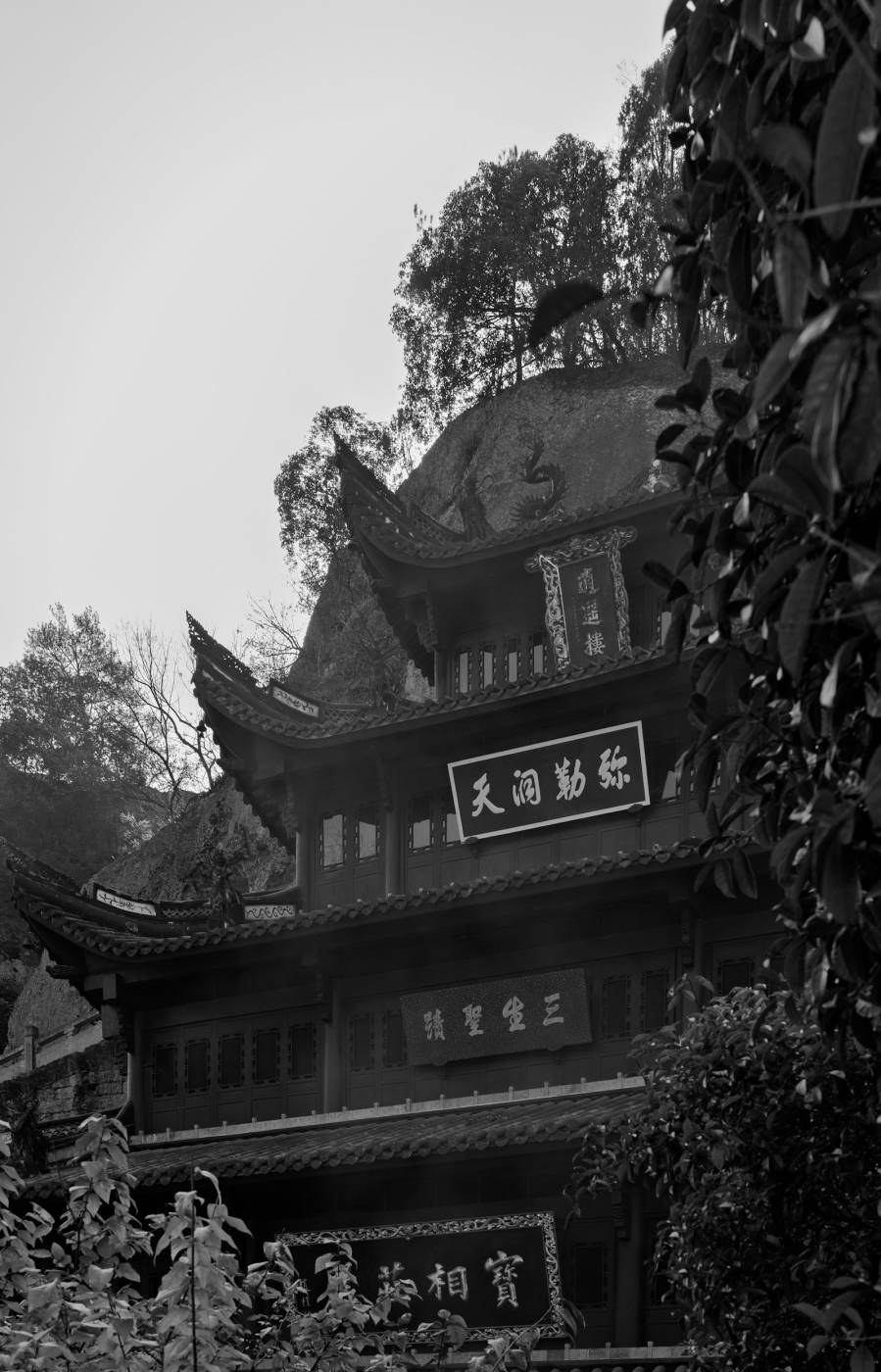
Kung Fu has no single beginning. There is no founder, no founding year, no birthplace you could circle on a map. What we have instead is a story several thousand years long about how people in China trained the body - for work, for defence, for health and for spiritual practice - and how those threads wove themselves into the art we now practise in Ljubljana.
This post is a map of that story: what we know, what we do not, and what of it actually reaches a modern training session.
Before Shaolin: soldiers, physicians and ritual dances
The earliest records of systematic physical training in China are older than any monastery. As early as the Zhou dynasty (from the 11th century BCE), soldiers practised a form of wrestling called jiao li, and court records describe ritual dances imitating the movements of animals.
A second thread grew alongside it: a medical one. Physicians prescribed movement and breathing exercises for the flow of energy and a long life - a practice that would later be named Qi Gong. These two threads, the martial and the medical, intertwine through the whole of the history, and their combination is precisely what makes the Chinese arts distinctive.

Shaolin: where the threads meet
At the end of the fifth century, the Buddhist monastery of Shaolin was founded on Mount Song in Henan province. Its real historical role was not that the monks “invented” martial arts - those existed long before. What made Shaolin special is that it placed martial training alongside meditation and breath, turning a craft into a complete practice.
The oldest solid evidence of the monastery’s martial activity is a stone stele from 728, describing how Shaolin monks helped the future emperor of the Tang dynasty in 621. From then on the monastery’s name appears regularly in military and administrative records - a school the state itself took seriously.
Gong fu (功夫) literally means “skill acquired through sustained effort” - and for centuries it described any mastery, not only the martial kind.
The Ming and Qing dynasties: flowering and prohibition
Under the Ming dynasty (1368-1644) the art flourished: the first surviving manuals were written, generals catalogued techniques in their treatises, and the Shaolin monastery stood at the height of its reputation.
The Qing dynasty (1644-1912) reversed the story. The Manchu rulers distrusted martial associations and banned them repeatedly, so practice retreated into private life - into families, villages and secret societies. Most of the styles we know today trace back to this period, and so does the habit of passing the art on personally, teacher to student, rather than through mass schools.

The twentieth century: near extinction, new beginning
The turn into the modern era nearly ended the art. In 1928 the Shaolin monastery was burnt down during the civil war, and during the Cultural Revolution (1966-1976) traditional practice in China was persecuted. Many teachers left - for Hong Kong, Taiwan and further abroad - and that scattering, paradoxically, saved the art: a worldwide community of schools grew out of it.
China later revived the tradition, but in two guises: as competitive wushu, built for tournaments and performance, and as traditional practice, which keeps the older purpose - developing body, breath and mind together. The two are often blended today, which is why it is worth knowing which of them a school actually teaches.
What of this history we train in Ljubljana
Our line runs through the Shaolin Temple Slovenia, where both of our teachers spent years as students and instructors. From the history above, three things reach our hall:
- the method - a long warm-up, basics, forms, breath and only then the fighting part; a sequence shaped by centuries, not by marketing;
- the link between martial and medical - Kung Fu and Qi Gong as one practice, not two separate programmes;
- the meaning of gong fu - skill comes with time and effort, never with shortcuts.
What we leave to history are the myths: flying monks, secret techniques and promises that six weeks will make you someone else. An art this old can afford honesty.


