
Sitting meditation has a reputation as something everyone ought to manage and most people cannot. People try, sit for ten minutes, notice they spent the whole time thinking about work, and conclude they are not built for it.
Walking meditation is the same work through a different door. In the Shaolin tradition it is not a substitute for sitting or a softer version of it - it is an equivalent practice, used between long stretches of sitting because the body cannot hold those without a break.
For a restless person it is often the only one that works.
Why walking works where sitting does not
Sitting offers nothing for attention to lean on. What remains is the breath, and for a busy mind the breath is too thin an object - within three breaths you are somewhere else.
Walking provides an uninterrupted stream of physical sensation: weight transferring, the foot setting down, balance moving from one leg to the other. Every step is a new event to return to. Attention has somewhere to sit.
Walking also burns off the part of restlessness that is physical. Many people who cannot hold a sit are not unfocused - they simply have too much in the body to stay still. Once that runs into the step, the mind settles by itself.
What it looks like
You need a stretch of about ten to fifteen paces, walked back and forth. Not a circuit and not a stroll - a straight line with a turn at the end. The reason is that it removes every decision about direction.
Walk considerably slower than is natural. Roughly one step per two or three breaths. That is slower than you imagine, and it feels wrong the first time.
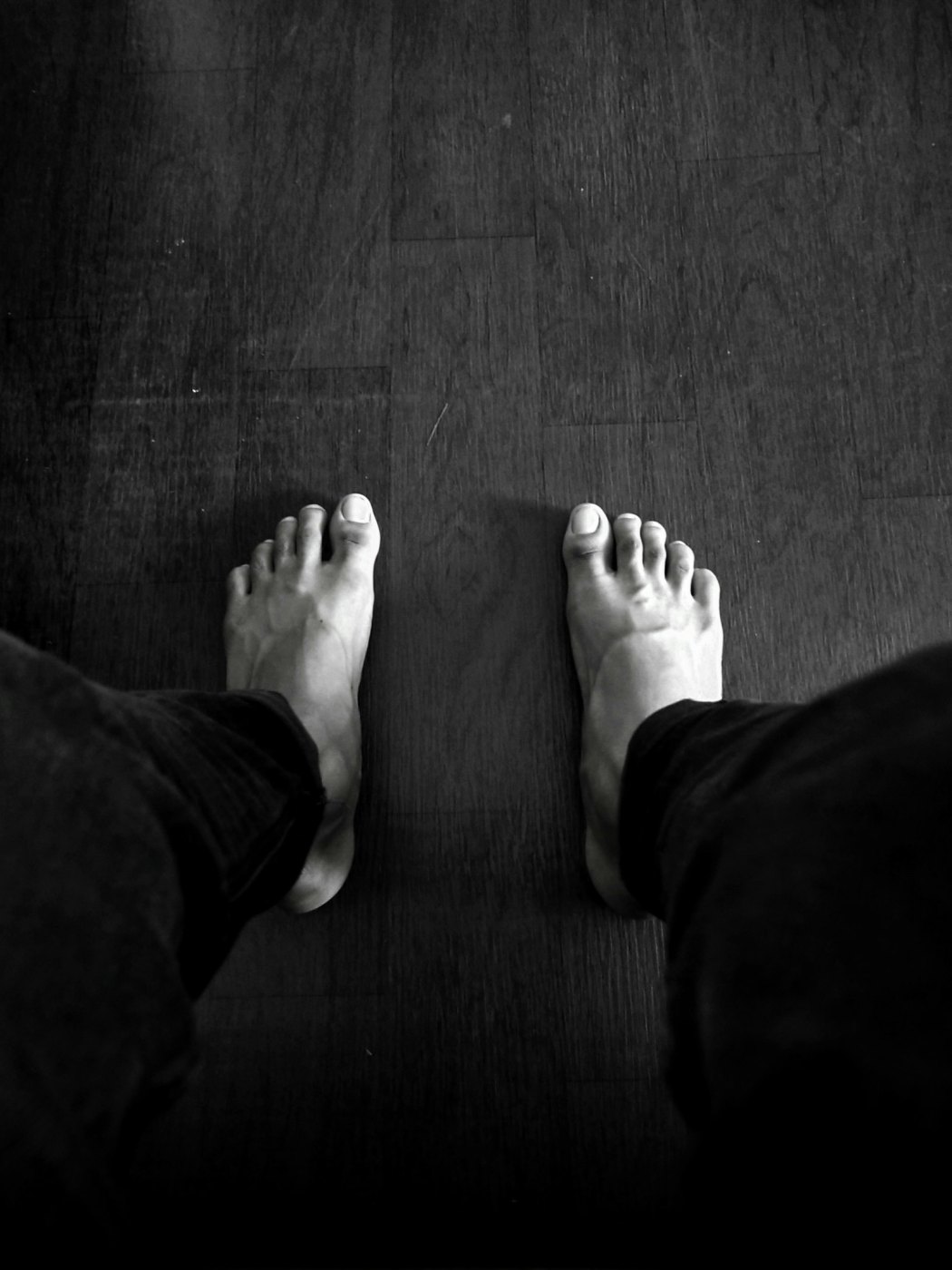
Put attention in the foot. Every step has four parts: heel lifting, foot lifting, moving forward, setting down. Try to notice all four. When you lose it - and you will, often - return to whichever foot is on the ground at that moment.
Let the arms hang loose or clasp them in front. The gaze rests a few paces ahead, not on the floor and not into the distance.
Twenty minutes. Ten if that is too much the first time.
What actually happens in those twenty minutes
The first five minutes are uncomfortable. It is too slow, you feel faintly ridiculous, and your head produces a list of things you could be doing instead.
Between the fifth and tenth minute the tempo settles. The step stops being a decision and becomes a rhythm, the breath lengthens on its own, and you notice for the first time that the foot is actually interesting - how much happens in a single step.
After ten minutes comes the thing this is done for. Not calm and not an empty mind; distance. Thoughts still arrive, but you notice them arriving rather than finding yourself in the middle of one. That is the entire content of the practice, and all it promises.

The commonest mistakes
Too fast. Nearly everyone walks too fast. If you cannot notice the four parts of the step, you are walking too fast.
Trying to empty the mind. It will not empty. The aim is not the absence of thoughts but noticing that they came. Every time you return to the foot, the exercise has worked - that is a repetition, not a failure.
Judging. “This isn’t working today” is one more thought. Treat it like all the others.
Where and when
At home a hallway or a room with three metres is enough. Outdoors, early morning is better, when nobody is about - not for the quiet, but because walking slowly among other people makes you feel watched, and that is a distraction.
The best time is after training or in the evening. After Kung Fu the body is tired exactly enough that the restlessness is gone, and twenty minutes of walking then does more than an hour of sitting at another time.
With us, meditation is part of training rather than a separate activity. Anyone who cannot sit starts by walking - and after a few months, sitting usually works.


