
We have already described the first year month by month. It is considerably harder to describe what happens afterwards - because the changes move somewhere they can no longer be measured in weeks. Here is an honest attempt, assembled from what we observe in people who have trained with us for five years or more.
In the body
The least surprising part. Hip and shoulder mobility are substantially different from the start, and balance is a capacity that is not easily lost. Low stances, which were a punishment in the first year, become a place where a person rests - which sounds impossible until it happens.
Less expected: fewer injuries in everyday life. Not because the body has become indestructible, but because the reaction to a stumble improves and because a person knows how to fall.
In the technique
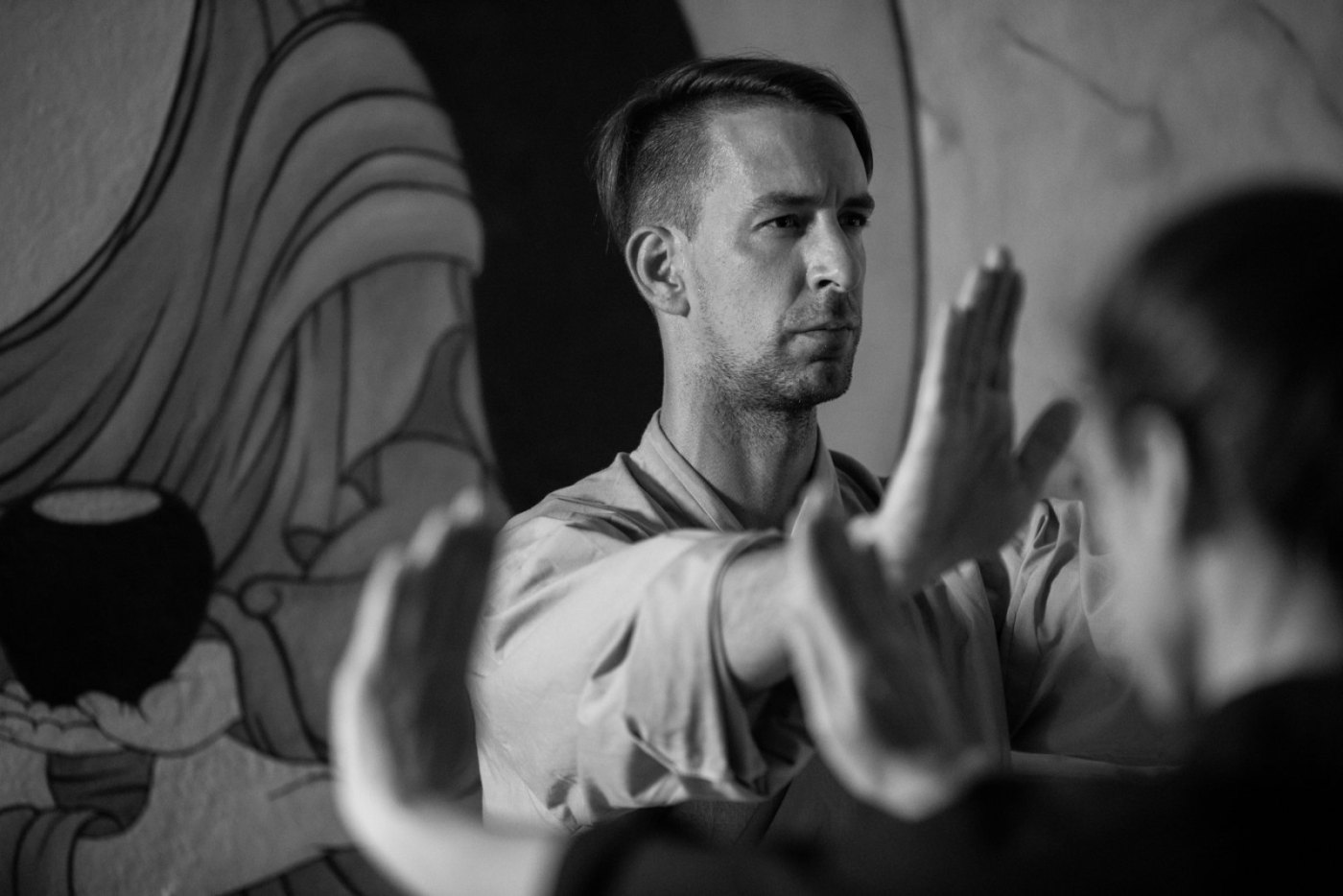
Here comes a reversal a beginner can hardly foresee. In the first year you learn to do new things. After five years you do the same things differently.
The one form you learned in your first year is performed, five years on, in a way that has little in common with it - the same path, different content. The corrections you get grow smaller and more important: two centimetres of weight, a quarter second of rhythm. This is why people at this stage often say they have only now begun to understand their first year.
A beginner wants to know how many forms they hold. After five years the question disappears by itself.
In the head
The biggest change, and the reason people stay. Training stops being something to squeeze into the week and becomes the point around which the week is arranged. The shift is quiet - nobody notices the day it happens.
Concretely: you spend less thought on motivation, because the question “am I any good” no longer matters. You tolerate not being good at something for a long time. And in situations outside the hall - in traffic, in an argument, on receiving bad news - you notice a space has appeared between the stimulus and the response that was not there before. That is probably the most tangible result of years of work with breath and attention.

In the group
After five years you are the one who shows a newcomer where to leave their bag. That transition happens unnoticed and matters more than it seems: explaining something reveals how much you do not know. With us, without belts, there is no official moment of becoming “senior” - you become it when others start turning to you.
What there is not
There is no moment of being finished. There is no sense of mastery; on the contrary, every year makes it clearer how large the thing is that you have taken on. And there is no shortcut - five years of training twice a week is roughly five hundred hours, still less than any serious profession requires.
Is it worth it
The answer is deeply personal, but one observation is telling: the people who have trained with us longest are, as a rule, those who once arrived without a particular goal. Those who came for a specific result achieved it and left. Training with no deadline, after all, cannot run out.


