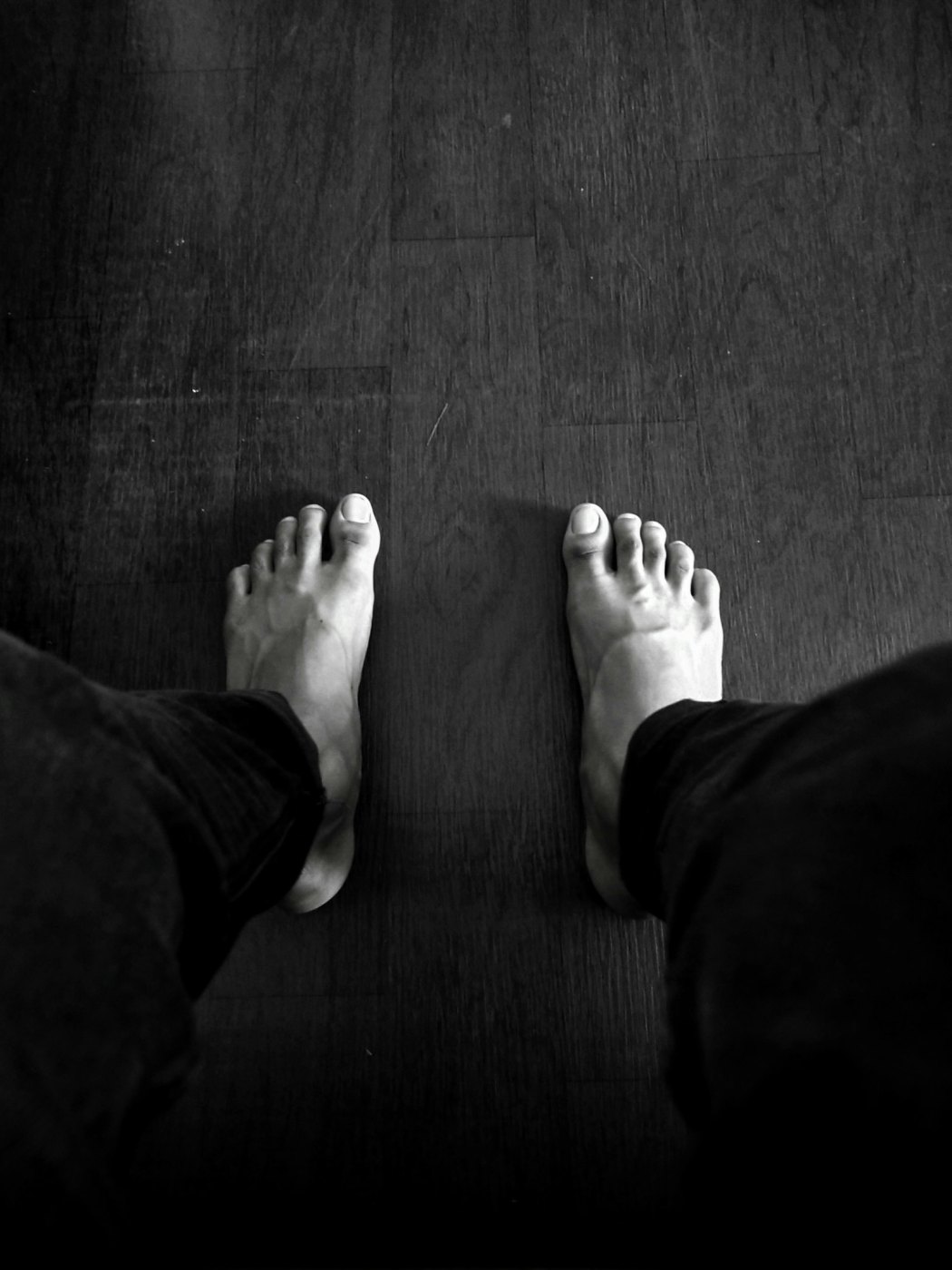
New students almost always ask two things: do I need shoes, and do I really have to be barefoot. The answer is no and no - but bare feet are not a ritual. They are a tool that does something shoes cannot.
What happens when the shoes come off
A foot has 26 bones, 33 joints and over a hundred thousand nerve endings. That is not decoration - it is a measuring instrument. Every step sends the brain information about slope, hardness and friction, out of which a response is shaped in milliseconds.
A thick sole smooths that information out. For running on asphalt that makes sense. For learning balance and weight transfer it is like practising calligraphy in gloves.
Step barefoot onto a wooden floor and three things happen. The toes spread and start to grip. The ankle begins making the micro-corrections a sole normally makes for it. And the weight shifts - usually backwards, because in shoes you have carried it forward all your life.

Why this matters in Kung Fu
- Stances check themselves. In a low stance without shoes you feel at once whether the weight is on the middle of the foot or the inner edge. That is the difference between stable and looking stable.
- Balance is built from the ground up. Standing on one leg is considerably harder barefoot - and therefore considerably more useful.
- Power travels through the foot. A strike that begins in the floor has to pass the heel, ankle and knee. If the first link is numb, it is lost there.
- Fewer ankle injuries. Stronger small stabilisers mean the ankle corrects itself when a step goes wrong.
A journey of a thousand miles begins beneath one’s feet.
What the body says in the first month
Week one: your feet will be tired and probably tender. That is normal - muscles you have not used in ten years complain like any other.
Weeks two and three: the calves. Barefoot training loads them more than shod training does, because there is no spring doing the work for them.
After a month: you notice you stand better in shoes too. That is the most common first comment.

When we are not barefoot
The rule is not a rule but a choice, depending on the surface and the body.
Outdoor sessions in front of the building or in a park are done in shoes - grass and asphalt are no place for bare feet.
Injuries and medical restrictions. With plantar fasciitis, diabetes, significant foot deformities or after surgery, thin training shoes are the better choice. Tell us and we will work it out.
The first visits, if it feels uncomfortable. Nobody will insist. A thin training shoe is a perfectly acceptable start.
Preparing your feet at home
- Walk barefoot around the flat. The simplest and most underrated of all.
- Spread your toes. Sitting down, try to separate them without lifting the foot. It will not work for the first few weeks.
- Roll a ball. A tennis ball under the foot, two minutes a side, after a day in shoes.
- Stand on one leg. While brushing your teeth, thirty seconds a side. Eyes closed once it gets easy.
Practicalities
In the hall at Ziherlova 44 in Ljubljana we train on a wooden floor that is clean and warm. You need nothing special for a first visit - bare feet are perfectly fine and usually the better choice.
If you do go for shoes, pick thin, flexible ones with no raised heel. Classic Chinese training shoes cost very little and do exactly what is needed: protect the skin and get out of the way for everything else.


