
If self-defence had to be reduced to one sentence, it would be this: the best technique was used five minutes earlier, when you decided to take the other route.
That is not philosophy but a description of how situations actually unfold.
Where it is decided
Every situation has phases, and every phase has its own options.
Phase 1: perception. Something is off. A group behaving differently. Someone who changes direction when you do. A feeling you cannot explain. Here you have the most options and the least risk.
Phase 2: approach. Someone enters your space. Asks the time, for a cigarette, for directions. Options are still wide: distance, voice, boundary.
Phase 3: escalation. Words become pressure. An attempt at isolation, a touch, blocking your path. Options narrow fast.
Phase 4: physical. Technique. This is where most courses live, and where the fewest options remain.
Every step back up that list doubles your options. Which is why training that deals only with phase four is training for the worst case.

Situational awareness without paranoia
The phrase sounds military and puts people off, because they imagine constant vigilance. It is something far more ordinary.
- Phone in your pocket when walking alone. One habit that does more than everything else combined.
- When you enter somewhere, note where the exit is. It takes a second and becomes automatic.
- Pay attention when something repeats. The same person at two corners. That is the only pattern worth tracking.
- Trust the feeling, even when you cannot explain it. The sense that something is off is often perception that has not yet reached words.
None of this is vigilance. It is a habit that after a few weeks demands no attention.
Peace comes from within. Do not seek it without.
Why leaving is the hardest skill
Technically it is simple. Psychologically it is the hardest part of the whole practice.
Leaving means letting someone else have the last word. It means possibly being taken for a coward. It means feeling that you backed down.
We train it explicitly in the hall: drills where a partner provokes verbally and the correct response is withdrawal. Many people discover that staying is physically easier for them than leaving - and that is precisely the information worth having about yourself before you are outside.
Decisions you make in advance
Under stress you do not decide. You execute what you decided earlier.
So it is worth thinking a few things through while calm:
- What will you do if someone stops you on the way home? Not how you will defend yourself - whether you will answer, walk past, or cross the road.
- Where is the line at which you leave? Set it in advance. During the situation it is too late.
- What is worth risking? A wallet, a phone and a bag are not. That sounds obvious and in the moment it is not.
What this means for training
Technique remains important - it is the last option and it has to exist. But it is the last, not the first.
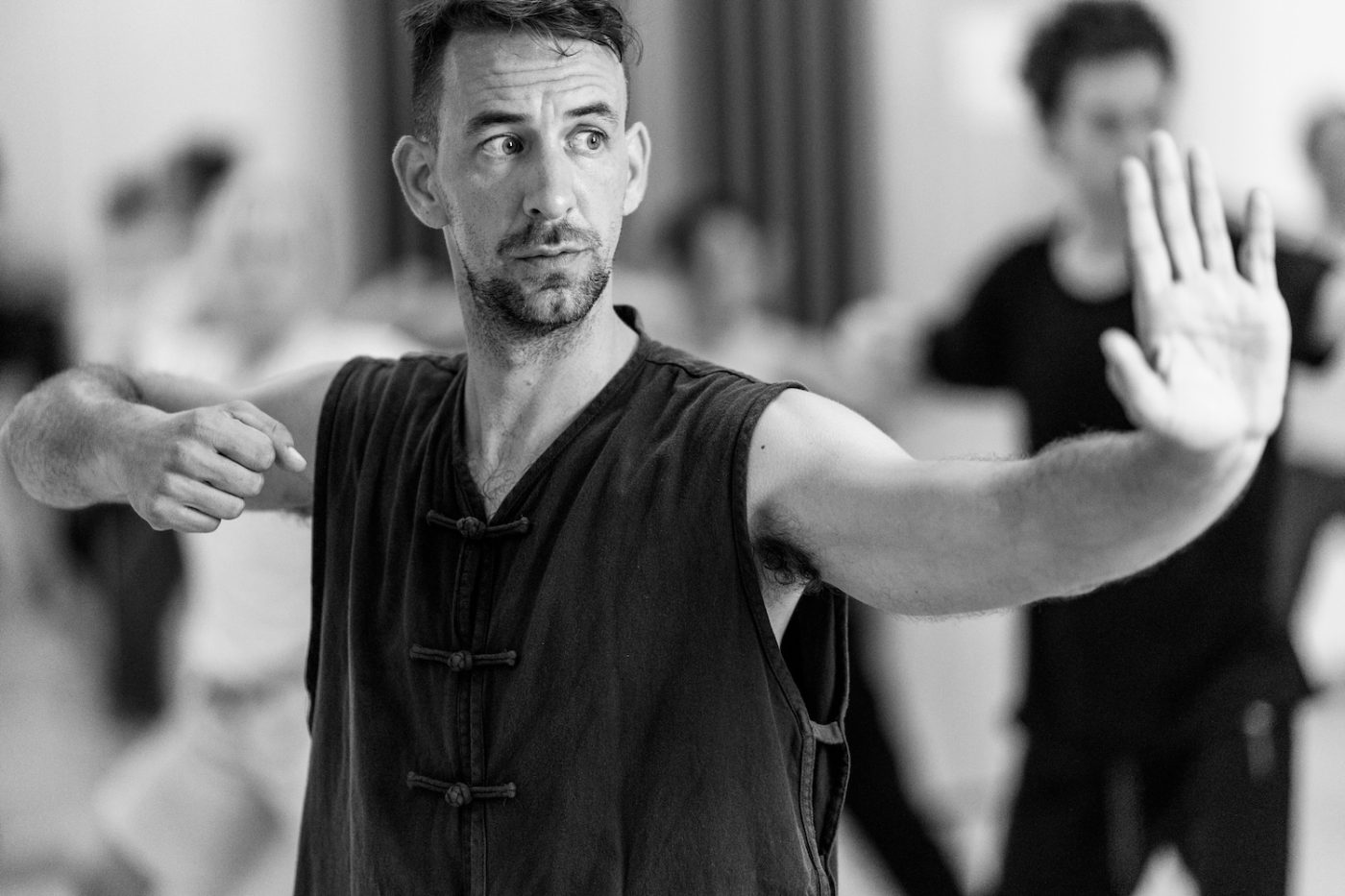
Which is why we do not separate self-defence from the rest of the practice. Distance is trained every hour. Posture is trained in every stance. Response under pressure is trained in partner drills. The decision to leave is trained whenever someone in the hall tries to pull you into a contest that was not agreed.
All of that is Kung Fu. Self-defence is not a separate subject - it is a consequence.


