
Something that often puzzles newcomers: the teacher comes over, corrects one thing - the position of an elbow, say - and moves on. The student knows their weight, knee and shoulders are also wrong, and wonders why none of that was mentioned. The answer is that it is deliberate.
Why one correction at a time
The body does not learn by understanding. It learns by repeating. Given five instructions at once, your attention splits five ways and none of them gets enough repetitions to stick. The result is familiar to every teacher: the student fixes everything at once, looks excellent for a minute, and next time is back where they started.
One correction repeated twenty times survives. Five corrections repeated four times are gone by the next class.
A teacher does not correct what is most wrong. They correct what can be changed right now.
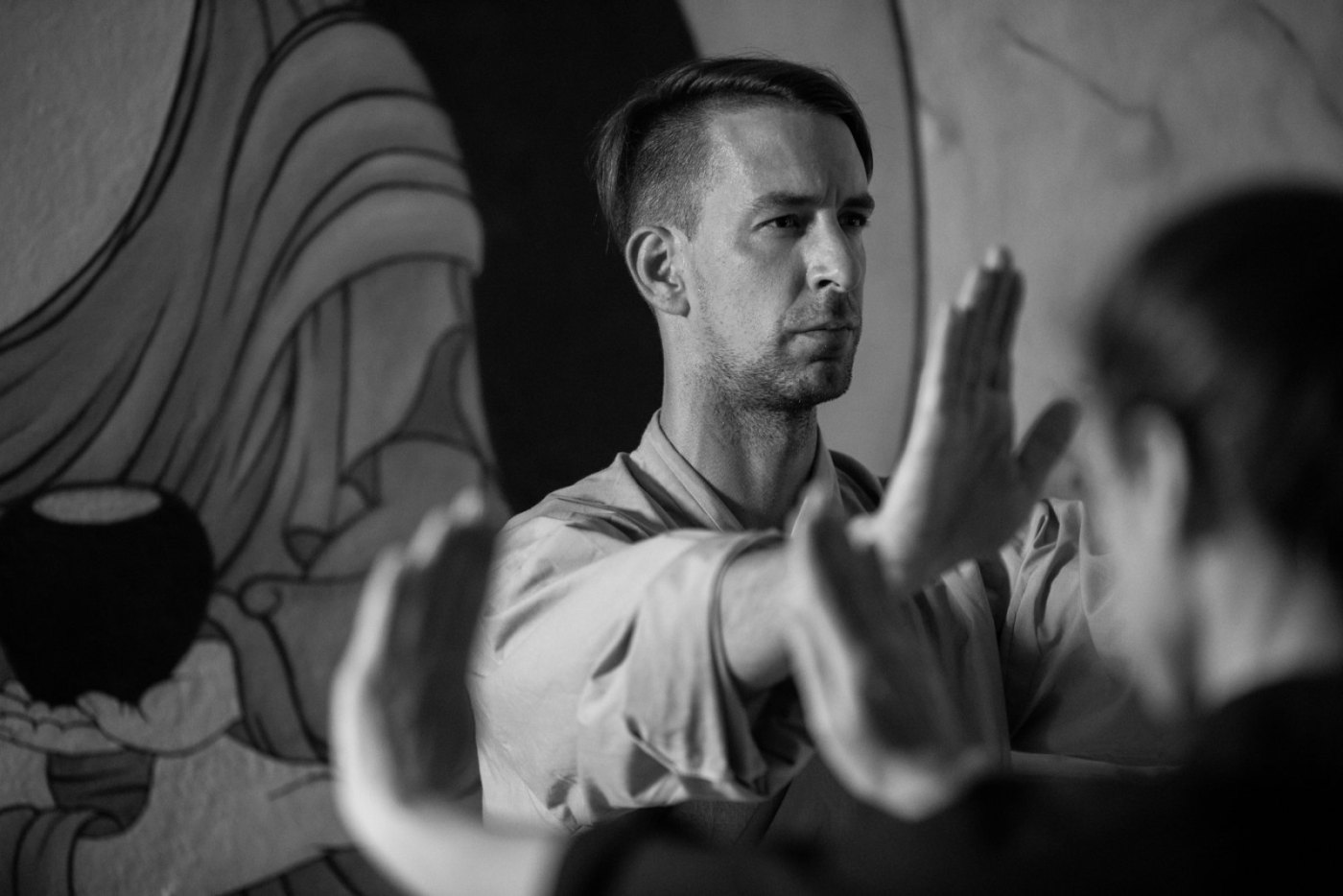
Why that particular correction
This is the interesting part, and the one students find hardest to guess. Faults in the body are connected: a badly placed knee is often the consequence of weight sitting on the wrong part of the foot. Correct the knee and you will fight it for the whole hour. Correct the foot and the knee often sorts itself out.
So the chosen correction is usually the lowest one in the chain - closer to the floor and closer to the cause. If it seems the teacher noticed the “less important” thing, the opposite is probably true.
Why a correction is often not a word
Frequently the teacher will simply take your wrist and move it three centimetres, or push your knee outward with a foot. That is not rudeness but the fastest route: the body understands touch immediately, whereas an explanation has to be translated first. In the tradition the art is transmitted largely this way, and that is precisely why language is not a barrier.
If physical correction makes you uncomfortable - an entirely legitimate position - say so. Everything can be shown another way.

What it means if nobody corrects you
Almost never that you did everything right. Usually one of two things: that you are at a point where you need repetitions rather than new information, or that whatever needs fixing depends on something else that is not yet in place. If a long time passes with no correction and it worries you, it is perfectly fine to ask. A good teacher welcomes the question.
How to get the most from corrections
- Do not apologise. A correction is not a reprimand. It is the very thing you came for.
- Repeat immediately. Three or four times while the feeling is fresh - not next time.
- Remember the feeling, not the words. You will forget “more weight in the heel”. You will not forget how it felt.
- Expect the same correction more than once. Some habits are thirty years old. Getting one five times is no sign that you are not progressing.
This is exactly why we keep groups small: so there are enough corrections to go round. Classes run at Ziherlova 44 in Ljubljana.


