
Parents sometimes ask when their child will “start sparring”. The answer is: considerably later than they expect, and our reasons are not only about safety.
Why free sparring is poor teaching for children
Put a child into free sparring before the basics are solid and something predictable happens: they use what they already know - which is none of the art. The result is disorganised flailing, which every further repetition then reinforces.
Early sparring therefore does not accelerate learning; it slows it. Undoing habits acquired in six months of premature sparring usually takes longer than learning the thing properly in the first place.

What else happens to the child
A child who regularly loses learns that martial arts are something they are not good at. A child who regularly wins learns something worse - that power over others feels good. Neither lesson is the one their parents enrolled them for.
We do not put a tool in a child’s hands before they know how to put it down.
What we do instead
Every ingredient of fighting can be trained separately, safely and - what counts most with children - more enjoyably:
- Distance games. Chasing, retreating, closing the gap. The child learns to judge when someone is too far and too close - the foundation of everything else.
- Reaction drills. Responding to a signal, to a partner’s movement, to a change of direction. This builds the speed that sparring merely tests.
- Pad work. All the force a child wants to release goes there. A pad takes everything and does not cry.
- Agreed exchanges. One attacks with a known technique, the other defends. Everything is known in advance, and the speed grows over weeks.
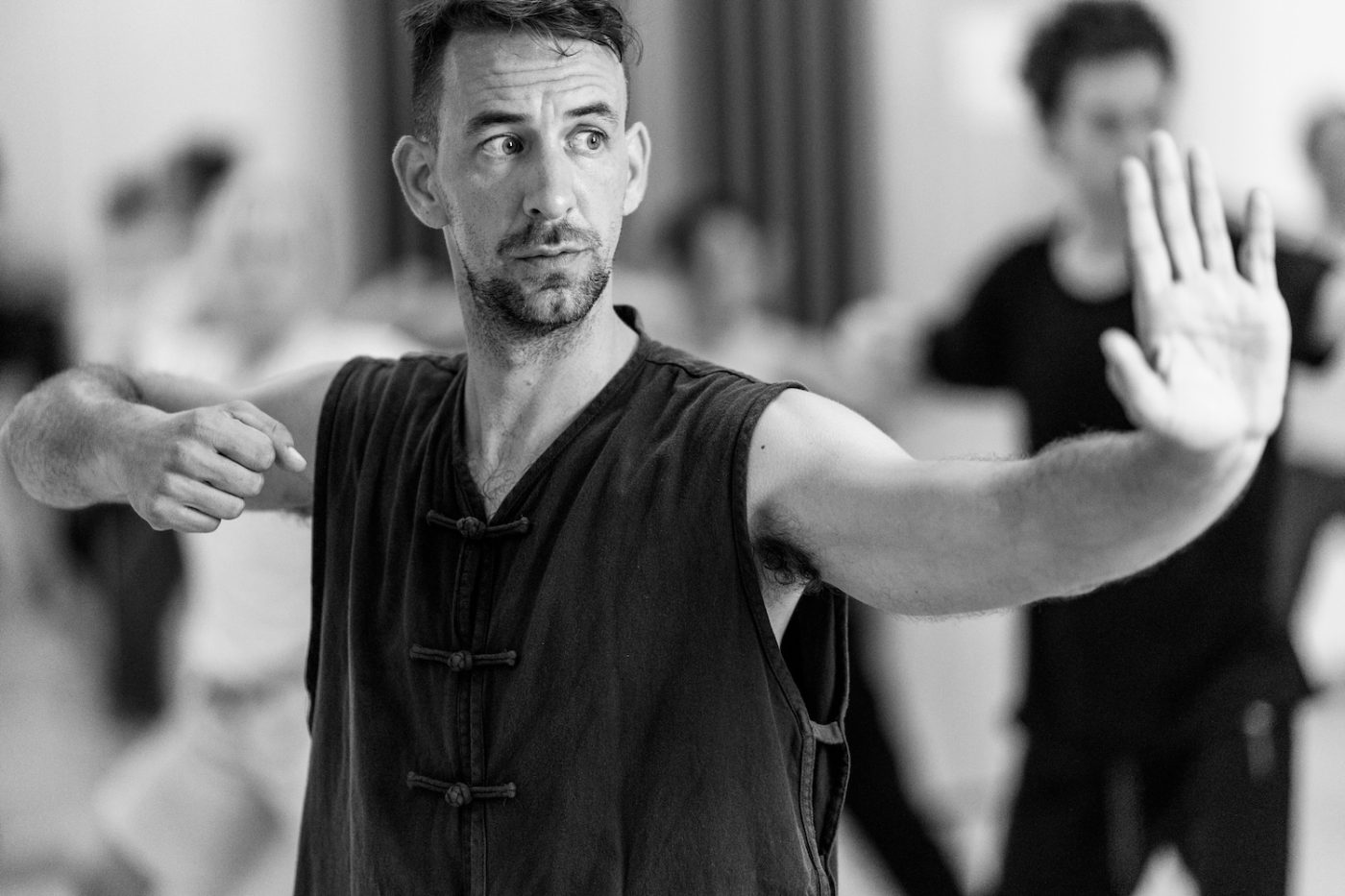
When contact begins
Gradually, and by maturity rather than birth year. First with protective equipment and limited force, within agreed drills. Free sparring against resistance belongs to the teenage groups, and not to everyone even there - some students never do it and are excellent practitioners regardless.
Three things count in that decision: whether the child knows the techniques well enough to use them under pressure; whether they can stop when the teacher says stop; and whether they want to. The last item matters as much as the first two.
So does the child learn anything useful
Yes, and more than it seems. For the real situations a child actually meets, the useful things are exactly the ones we build: awareness of surroundings, a sense of distance, staying calm, a loud voice and the ability to leave. Free sparring in a hall is poor preparation for that - which, incidentally, holds for adults too.


