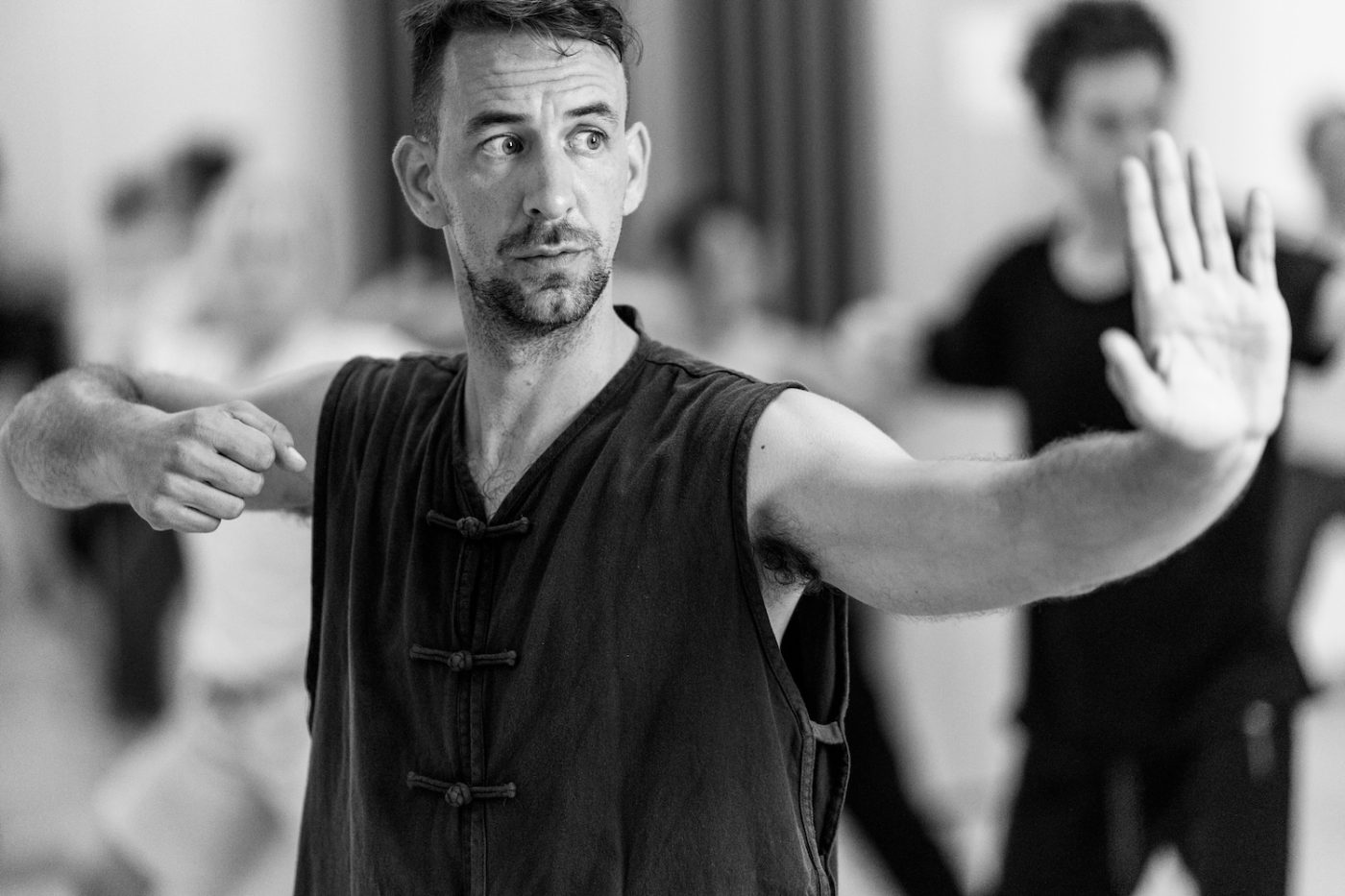
If you are looking for a martial art in Ljubljana, you face several systems that at first glance do the same thing: teach you to defend yourself. The differences between them are real, but rarely what internet forums claim. Here is an honest comparison - with no suggestion that any of them is bad.
Where they come from
Origin explains more than any list of techniques. Kung Fu is an umbrella name for the Chinese arts, formed over centuries in monastic, military and family settings. Karate developed in Okinawa and was systematised in Japan in the twentieth century. Taekwondo is a Korean system shaped in the mid-twentieth century and later strongly marked by Olympic sport. Brazilian jiu-jitsu descends from Japanese judo and became, in Brazil, a specialisation in ground fighting.

What each one actually trains
- Kung Fu - a wide range: strikes, kicks, throws, breath work and whole-body conditioning. Knowledge passes through forms, so the path is slower but covers more than fighting alone.
- Karate - precision and penetration in a single strike, a clear structure of grades, strong discipline. A very well-ordered system of learning.
- Taekwondo - kicks, explosiveness and leg mobility; its competitive branch is highly developed as a sport.
- Jiu-jitsu - what happens when a fight reaches the ground: locks, chokes, positions. The most directly testable in one-on-one sparring.
No art covers everything. Each is an answer to a particular question - what matters is knowing which question is yours.
Where Kung Fu differs
In two ways. First, breath and settling are part of the system, not an add-on - with us Qi Gong sits in the same hour as the martial work, which is unusual in most other arts. Second, the goal is not a competitive result. That means progress is less clearly measurable than in a sport with rankings, but it gives you training you can do at twenty-five and at sixty.
For some people that is also Kung Fu’s greatest weakness. If competition, medals and clear comparison with others are what motivate you, taekwondo or jiu-jitsu will give you more.

How to choose
Frankly: the difference between two schools of the same art is often greater than the difference between arts. A good karate school near home will serve you better than a poor Kung Fu school across town. So we recommend what we would recommend to a friend:
- visit two or three schools and attend a class, not just a chat;
- watch whether the teacher corrects individuals or merely counts repetitions;
- ask who taught whom, and where;
- check whether they promise results in weeks - serious schools do not.
If you want our answer
At Body.Mind in Ljubljana we train Shaolin Kung Fu together with Qi Gong and Chan meditation. It suits someone who wants physically demanding training that is not a contest - and who is also interested in what happens with the breath and the head, not only the fist. A first class is the fastest way to find out whether that is you.


